Category: Taxes & Employees

  • Tax Resources for Craft Business Owners

    With the beginning of a new year, there’s one thing that starts looming: Filing taxes. Don’t worry Silhouette and Cricut craft business owners – I’ve got you covered with a lot of tax information on the Cutting for Business blog. Today, I’m rounding it up in one place. Let’s start at the beginning.

    I get asked a lot: “Do I have to report the income in my Silhouette or Cricut business?” Most likely, the answer is yes. I see misinformation about this all over: There’s no “magic” number for what amount of income you should report – and the IRS is pretty clear on when you are an official business. Read more in this post:

    Do You Have a Silhouette Cameo or Cricut Explore or Maker Craft Hobby or Business? - by cuttingforbusiness.com

    Next, if you work for yourself in the US, but prepared for self employment tax:
    Income Tax and Self Employment Tax in Your Silhouette or Cricut Small Business - by cuttingforbusiness.com

    Maybe the only good thing about filing taxes? Tax deductions! Read on: 
    Tax Deductions in Your Silhouette or Cricut Business Craft Business - by cuttingforbusiness.com
    Still not sure where to start? Head here and grab my printable tax prep checklist in this post:
    Printable Tax Prep Checklist for Silhouette or Cricut Small Craft Businesses - by cuttingforbusiness.com

    Wondering about a 1099 from Etsy (or other marketplaces)? Find out if you’ll get one:
    Why Didn't I Receive a 1099 from Etsy, Ebay, Amazon, Stripe? By cuttingforbusiness.com.

    While I’ve been highlighting posts about Federal taxes, don’t forget you’ll also be responsible for sales tax in many states. But, what is sales tax? Find out in the next post:
    Should You be Charging Sales Tax to Your Customers in Your Silhouette Cameo or Portrait and Cricut Explore or Maker Business? By cuttingforbusiness.com.
    With recent legislation last year, you may be responsible for taxes in states that you don’t live in, too. Get more information in this post:

    Internet Sales Tax Legislation - What Craft Business Owners Need to Know for Silhouette Portrait or Cameo and Cricut Explore or Maker Crafters - by cuttingforbusiness.com

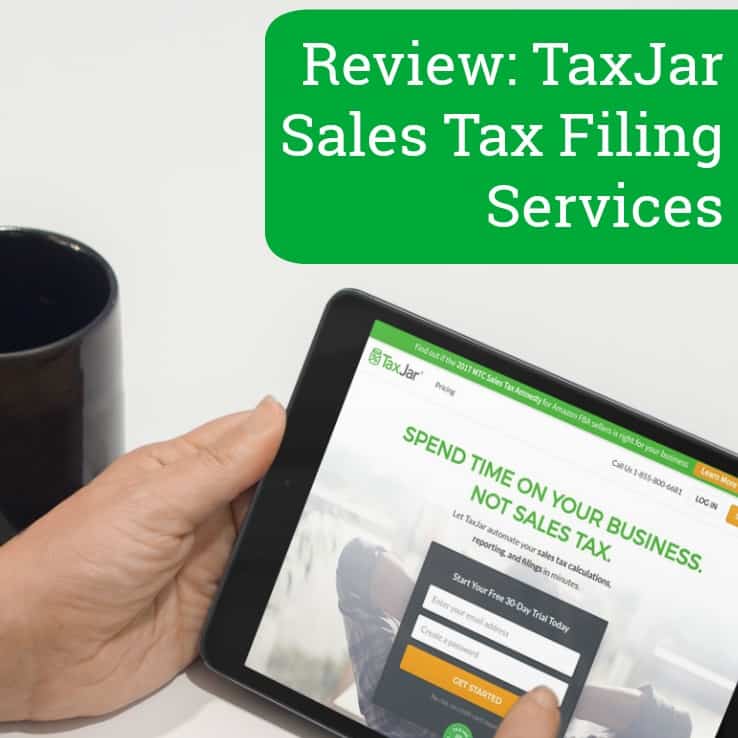
    Too busy to be bogged down with filing sales tax? I use a service to file automatically. Here’s my review:
    Review: TaxJar Sales Tax Preparation and Filing Service for Small Businesses - by cuttingforbusiness.com

    Was this good information? Share the image below on Pinterest.
    Tax Resources for Craft Business Owners - Silhouette Portrait or Cameo and Cricut Explore or Maker - by cuttingforbusiness.com

  • Internet Sales Tax Legislation – What Craft Business Owners Need to Know

    Internet sales tax laws are changing the way that both large and small businesses collect sales tax. There has been various federal legislation trying to make its way into law over the last several years – but as of 2020 – it hasn’t happened yet.

    As a small business owner, the best thing you can do is stay up-to-date with the Internet Sales Tax Laws. 

    Current Sales Tax Laws

    Under current federal laws in the United States, sellers are required to collect and remit sales tax to states where they have nexus. Nexus is a fancy term that means that the business is registered in that state.

    For example: As a business based in Florida, I am required to collect sales tax from buyers in Florida and remit it to the state of Florida. If my business also had a warehouse in Texas, I would be required to collect and remit sales tax in Florida and Texas. Similarly, if I were based in North Carolina, I would be required to collect and submit sales tax in North Carolina.

    The Problem with the Current Laws

    Under the current federal laws, states feel they are missing out on sales tax collection when internet purchases are made from out of state.

    Current State Legislation

    Since the federal government hasn’t passed a law, states have been busy creating their own laws regarding sales tax on internet purchases. It’s nearly impossible for me to keep up with all the changes in all 50 states. Instead, I scoured the internet and found this awesome chart to help you. Read it, understand it, and bookmark it. 

    Selling Through Etsy

    Wait! Before you go, did you know that if you are selling through Etsy they are likely already collecting and remitting sales tax on your behalf? Read more at this link. A word of caution though: Some state requirements are based on the number of transactions you’ve done in the state. If you sell 20 things on Etsy in a particular state, but 200 to the same state off Etsy – Etsy might not correctly be collecting and remitting sales tax on your behalf because they have no idea about the off Etsy sales you’ve made.

    Was this information helpful? Save it to Pinterest.

    Internet Sales Tax Legislation - What Craft Business Owners Need to Know for Silhouette Portrait or Cameo and Cricut Explore or Maker Crafters - by cuttingforbusiness.com

  • Tax Tips and Advice for Craft Business Owners

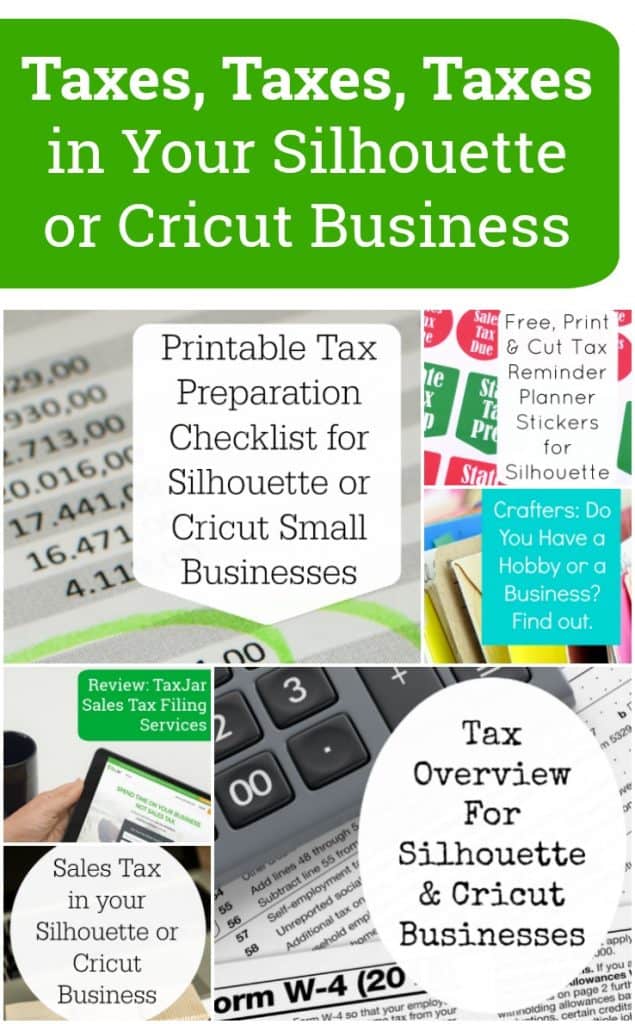
    One thing is certain at the beginning of a new year: Small business owners have to file taxes. Lately, I’ve been bombarded with questions about taxes, tax prep, and incorporating your business. Let’s take a look back on the tax resources I’ve shared with you in the past.

    Probably the most asked question I’ve gotten lately is: “Do I have to report the income in my Silhouette or Cricut business?” Most likely, the answer is yes. There’s no “magic” number for what amount of income you should report – and the IRS is pretty clear on when you are an official business. Read more in this post:Do You Have a Hobby or a Business - An must read for Silhouette or Cricut business owners - by cuttingforbusiness.com

    Next, if you work for yourself in the US, but prepared for self employment tax:Tax Overview for Silhouette & Cricut Business Owners - by cuttingforbusiness.com

    Best thing about filing taxes? Tax deductions! Read on: Tax deductions in your Silhouette or Cricut Home Craft Business - by cuttingforbusiness.com

    If your head is spinning from information overload, grab my printable tax prep checklist in this post:Printable tax prep checklist for Silhouette & Cricut small businesses - by cuttingforbusiness.comWondering about a 1099 from Etsy (or other marketplaces)? Find out if you’ll get one: Will I get a 1099 from Etsy? Find out if you meet the criteria. By cuttingforbusiness.com

    While I’ve been highlighting posts about Federal taxes, don’t forget you’ll also be responsible for sales tax in many states. But, what is sales tax? Find out in the next post:What is Sales Tax? A must read guide for Silhouette and Cricut small business owners - by cuttingforbusiness.com Too busy to be bogged down with filing sales tax? I use a service to file automatically. Here’s my review:Review: TaxJar Sales Tax Filing Service - A great resource for Silhouette Cameo or Cricut Explore or Maker craft businesses - by cuttingforbusiness.comLast, but not least, when it comes to tax preparations – deadlines are deadlines. Use your Silhouette Cameo or Portrait to whip up some tax reminder stickers. Print and Cut Tax Reminder Stickers for Silhouette Portrait or Cameo - by cuttingforbusiness.com

    If you are realizing that you need to be better prepared for next year’s taxes, grab my free printable small business planner and keep yourself on track all year long.Free Printable Craft Business Planner for Silhouette Portrait, Cameo, Curio, Mint, Cricut Explore, or Maker crafters - cuttingforbusiness.com

    Love the tips here? Share the image below on Pinterest.
    Tax tips and advice for your Silhouette Portrait or Cameo and Cricut Explore or Maker small business - by cuttingforbusiness.com

  • What is an EIN Number? Do You Need One?

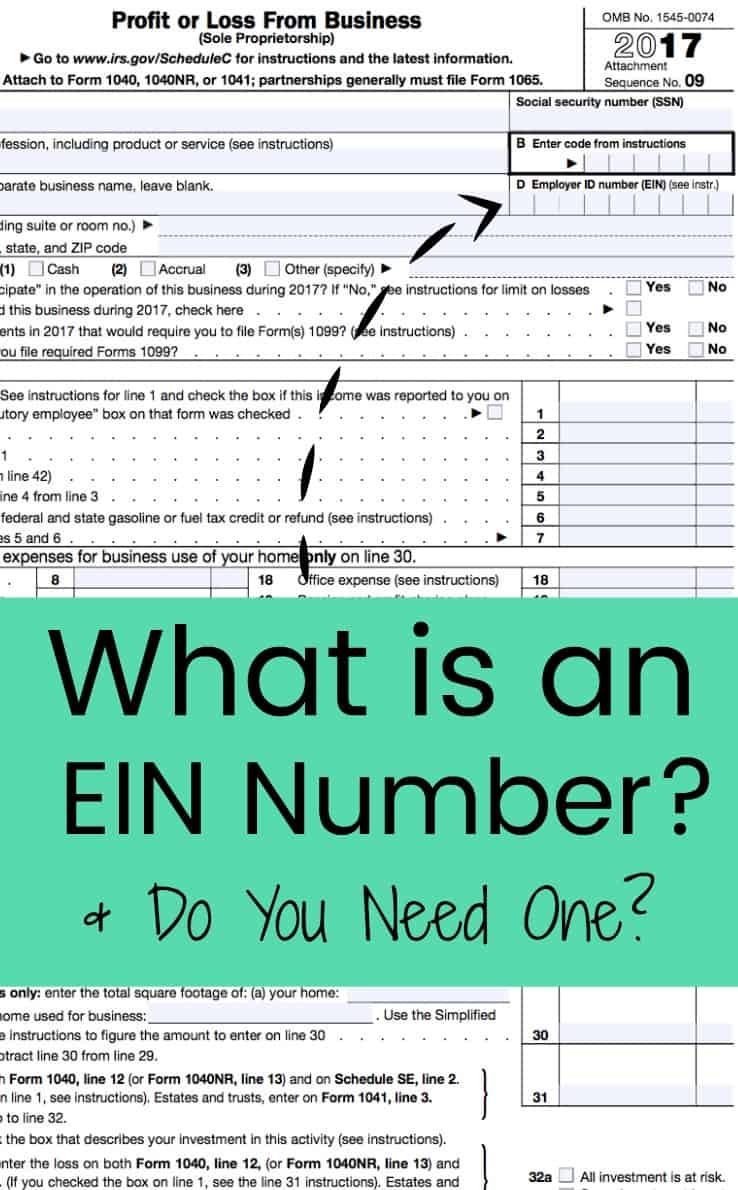
    As you’re working through your tax paperwork for 2018, you might come across a blank spot on paperwork to write your EIN number. Today, we are going to take a brief look at EIN numbers and your craft business.

    What is an EIN Number?

    EIN stands for Employer Identification Number. An EIN number, also called a FEIN (Federal Employer Identification Number) or Federal Tax Identification Number, is a unique way to identify your business. It’s 9 digits long and is public record – meaning anyone that knows your business name can look up your EIN number online.

    Do You Need an EIN Number?

    Generally, if you are incorporated as a sole proprietorship or a single member LLC with no employees, you do not have to obtain an EIN number. Instead, you can use your social security number on official paperwork.

    There are a few circumstances where a sole proprietorship or single member LLC might need an EIN number. These aren’t likely in craft businesses, but for others that may happen upon this article, click here for the IRS EIN Number Quiz.

    With identity theft so common is our modern times, I prefer to use my EIN number on paperwork related to my business instead of my social security number. I mean, once I turn over my social security number, I can’t control whether or not the paperwork gets left on a desk for someone else to spy. Since an EIN number is free, I’d recommend you also get one.

    How to Get an EIN Number

    Now that you know it’s free, let me also tell you that it is fast and easy to obtain. First, go to this link at the IRS website and then complete the form. After the IRS successfully validates your information, your EIN number is immediately available.

    If you’d prefer to fax or mail your EIN application, click here for instructions.

    That’s it! Dealing with the government usually isn’t fast and painless, but this time it is!

    If this article was helpful, save the image below to Pinterest!

    What is an EIN Number? Do You Need One? Great for Silhouette Cameo, Curio, or Portrait and Cricut Explore or Maker Crafters - by cuttingforbusiness.com

  • Review: TaxJar Automatic Sales Tax Filing Service for Small Business

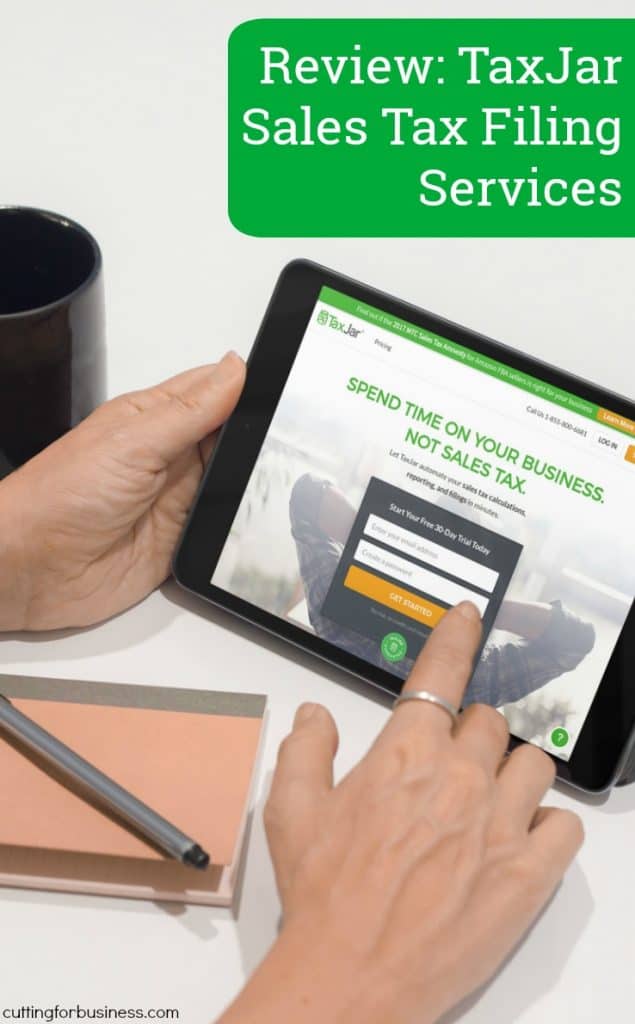
    Taxes. No one likes them and I’m sure that small business crafters certainly would rather be creating products than crunching numbers to file sales tax returns. Today, I’m taking a minute to highlight a service called TaxJar which automatically computes your sales tax and will even file for you. Before I tell you all about them, this post has been a long time coming. Last week, I celebrated my one year anniversary of using TaxJar. I was not solicited to write this post.

    Need a refresher on sales tax? Check out this post.

    What is TaxJar?

    TaxJar is an online service that computes your sales tax and either gives you a report with accurate numbers to file your sales tax return, or you can set TaxJar to file it automatically for you.

    How does it Work?

    When you sign up and create an account with TaxJar you will connect the marketplaces you sell through to your TaxJar account. TaxJar automatically pulls over your sale amounts and crunches the numbers, allowing you to quickly and accurately file your sales tax return – or have them automatically file it. That’s it! Currently, TaxJar is compatible with:

    • Etsy
    • Paypal
    • Square
    • Shopify
    • Stripe
    • Amazon
    • Ebay
    • Woocommerce
    • Ecwid
    • Big Commerce
    • …and more!

    How much does TaxJar Cost?

    TaxJar is billed monthly based on the number of transactions you do. For most craft businesses, you’ll fall into either the Basic or Plus plans – 1,000 transactions or 5,000 transactions – for $19 a month or $49 a month. If you’d like TaxJar to automatically file your return, it’s $19.95 per filing per state.

    My Thoughts After a Year

    Like I mentioned earlier, as of last week, I’ve now used TaxJar for a year and have had zero issues. I file sales tax in the state of Florida monthly. The first several months, I used the end of month report to manually file sales tax on the state of Florida website. On the fourth month, I put my faith in TaxJar and let it file my return automatically. To date, TaxJar is still filing my returns automatically.

    If you’d like to give TaxJar a try, they offer a 30 day free trial if you click here.

    Help another crafter save time and save to Pinterest:

    Review: TaxJar Automatic Sales Tax Filing Service for Small Business - Great for Silhouette Cameo or Cricut Small Business Crafters - by cuttingforbusiness.com

  • Why Didn’t I Get a 1099 from Etsy, Ebay, Amazon?

    Every year, as small business owners are preparing their taxes, I get the same question: When will I receive my 1099 from Etsy (or other online marketplace)? Answer: 1099’s are required to be mailed by January 31st. If you have not yet received it well past this date, you may have not met the qualifications.

    The laws are changing. The information below is good through 2021:

    What is a 1099-K?

    Similar to a 1099-MISC, a 1099-K reports gross sales from a payment processor. The figure shown on your 1099-K is your gross sales which include shipping, refunds, card processing fees, sales tax, and even canceled orders.

    Who Will Receive a 1099-K?

    In order to receive a 1099-K from Etsy, Amazon, Paypal, or Stripe, you must have had at least 200 direct checkouts AND $20,000 in transactions. If you do not meet both requirements, you will not receive a 1099-K.

    Starting in 2022, the federal threshold for issuing a 1099-K will drop from $20,000 and 200 transactions to $600 with no minimum transaction level. This means that you will receive a 1099-K if you have more than $600 in checkouts. This change is due to a new federal law called the American Rescue Plan Act.

    Why Didn't I Get a 1099 from Etsy, Ebay, Amazon? By cuttingforbusiness.com.
  • Silhouette Cameo Print and Cut Tax Reminder Planner Stickers

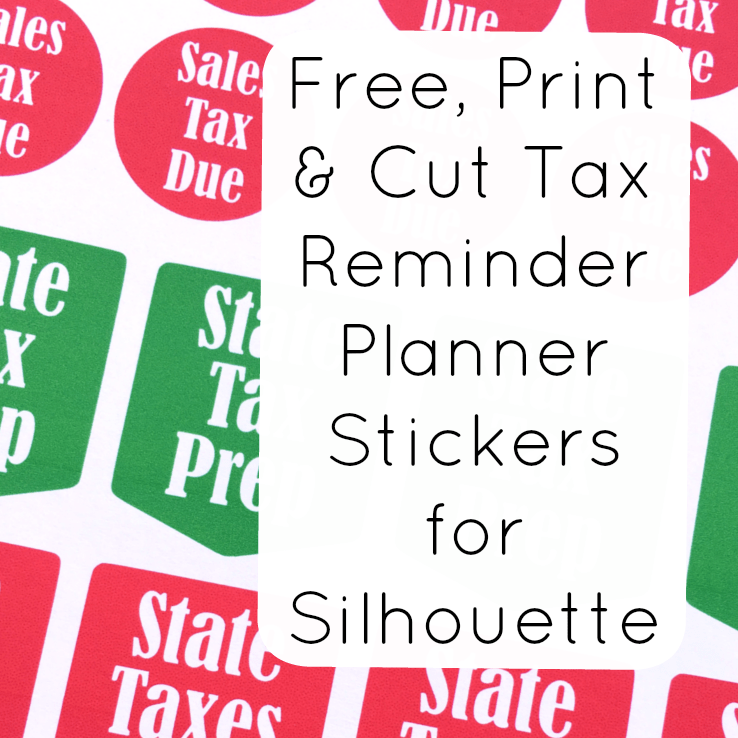
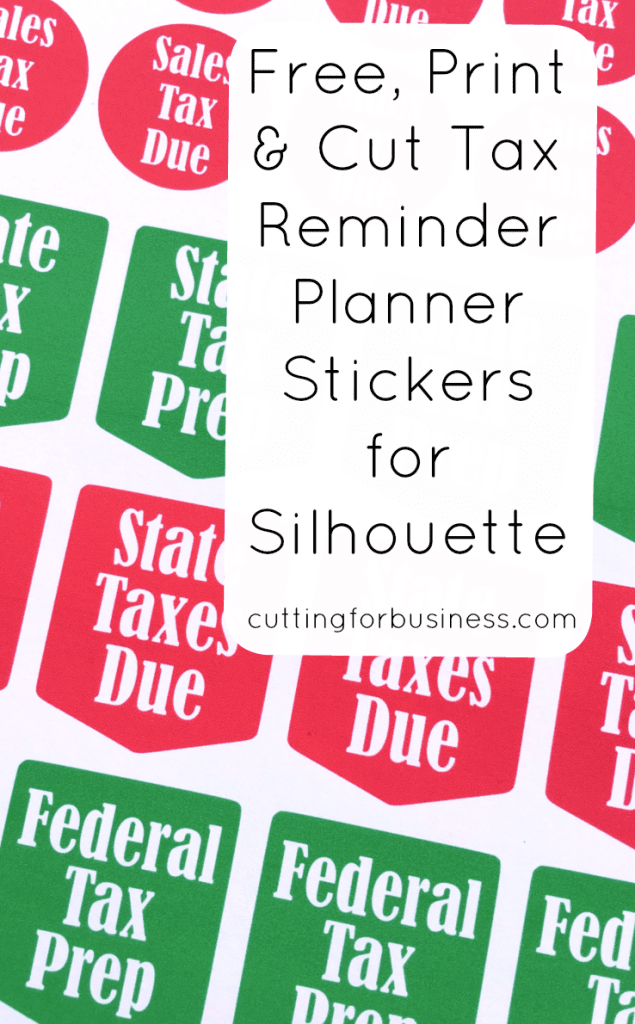
    We made it through tax week at Cutting for Business! If you missed any posts along the way, I talked about sales tax, an overview of taxes, tax deductions, and I shared a printable tax preparation list. Today, I’m sharing print and cut Silhouette Cameo calendar or planner tax reminder stickers. As I mentioned, the fees can be quite high for filing your tax returns late – so I’m making sure that you are right on time!

    This file is for personal use only and cannot be sold or uploaded elsewhere. Enjoy!

    Silhouette users can download the file in .studio3 format here.

    Silhouette Cameo Print and Cut Tax Reminder Planner Stickers by cuttingforbusiness.com

  • Tax Deductions in Your Silhouette or Cricut Business

    As we continue on talking about taxes on the blog (see this post and this post if you are a bit behind), we are going to look at a list of common tax deductions in your Silhouette or Cricut business.

    Tax deductions are expenses that your business has encountered throughout the year. You use deductions to reduce the taxable income that your business has had throughout the year – thus allowing you to pay less in taxes at the end of the year.

    Two Kinds of Deductions

    For some deductions, you take the entire value of the deduction at one time; while others you take a portion of the deduction over several years. For example, you may take a deduction of $40 for vinyl you recently purchased. However, since you will continue to use your machine throughout several years, your machine depreciates and you take smaller deductions over the useful life of your machine.

    Common Tax Deductions in Your Silhouette or Cricut Business

    • Supplies – Vinyl, paper, glue, transfer tape, weeding tools, blank products, and so on.
    • Machines – Cameo, Curio, Mint, Cricut, Alta, Glowforge, heat press, postage scale or printer, computer you purchased for business use, or camera and related photography equipment.
    • Software – Like Silhouette Studio Designer or Business Edition Upgrade, fonts, and designs.
    • Books – Any book you’ve purchased to better your business or to improve your skills (like Diving In: 30 Days to Your Silhouette Business – shameless plug to one of my books).
    • Insurance – Business insurance.
    • Event Entry Fees – Like those from craft shows or fairs.
    • Home Office Overhead – The space in your home you use for your business, internet, electricity, water.
    • Legal Fees – These include attorney fees from setting up your business, trademarking your designs, registering copyrights.
    • General Office Supplies – These would include envelopes, tape, pens, pencils, tacks, staples, file folders, and so on.
    • Postage and Shipping Supplies – Don’t forget about boxes, envelopes, tape, packing peanuts, bubble wrap, and labels.
    • Advertising Expenses – Including promoted listings on Etsy, Pinterest, Facebook, Google Adwords, and print materials including business cards or post cards.
    • Tax Preparation Expenses
    • Accounting Expenses – Including monthly accounting subscription, or the costs related with hiring an accountant.
    • Phone expenses – Cell phone bills, phone, phone apps for your business.
    • Travel Expenses – You can deduct things like gas, lodging, food.
    • Start Up Costs – Usually, you can deduct up to $5,000.
    • Credit Card Processing Fees
    • Display Materials and Photography Props
    • Charitable Donations – This includes product donations for fundraisers.
    • Health Insurance Premiums
    • Childcare Expenses.
    • …most things that you have purchased for use in your business can be taken as a tax deduction.

    Whew, that’s a lot of deductions! When taking deductions related to your Silhouette or Cricut business, the IRS will not ask for copies of each receipt. However, you are required to keep your receipts on file, either digitally or hard copies. Personally, I keep paper records in binders.

    Tax Deductions in Your Silhouette or Cricut Business Craft Business - by cuttingforbusiness.com

  • Printable Tax Prep Checklist for Silhouette or Cricut Small Businesses

    Let’s keep talking taxes! (I know, you are probably groaning right now, but this stuff is important!)

    Whether you are filing your taxes yourself or bringing them to a tax professional, I’m offering you a printable checklist of everything you need to have on hand before you begin.

    Download the Printable Tax Checklist here.

    Printable Tax Prep Checklist for Silhouette or Cricut Small Craft Businesses - by cuttingforbusiness.com

  • Should You Be Charging Sales Tax to Your Customers?

    In addition to all the recent talk about Federal and State taxes over the last few weeks, let’s switch over and talk about Sales Tax.

    What is Sales Tax?

    Sales tax doesn’t cost your business anything. Instead, you act as the middleman and collect sales tax from your customer and submit it to your state. Additionally, Currently, for items sold online and shipped to customers out of your state (or out of a state that you formally do business in) – there is no sales tax. When selling to a customer in your state, you will need to charge them sales tax.

    How to Collect Sales Tax and How Much to Charge?

    To begin collecting sales tax, you will need to register with your state’s Department of Revenue. Registration can generally be done online. 

    The sales tax amount that you charge will vary depending on the state you live in and the sales tax structure that they operate upon. Some states use an origin based rate (tax amounts are determined by where you live); while others use a destination based rate (tax amounts are determined by the destination of the buyer). In addition to the state sales tax rate, your county or city may have additional sales tax surcharges. For example, in my home state (Florida) the sales tax rate is 6% and my county (Osceola) has a 1% county surcharge for a total sales tax rate of 7%.

    How and When to Submit Sales Tax?

    Again, your state’s Department of Revenue will be able to provide you specific details on submitting your sales tax. In many states, new filers pay sales tax quarterly – but other common sales tax due dates are monthly or yearly. Some states will provide on time filers with a credit for filing on time, while others have high late fees for filers who don’t file on time.

    What States Don’t Have Sales Tax?

    There are always exceptions! Five states in the USA have no sales tax: Alaska, Montana, New Hampshire, Delaware, and Oregon. If you live in one of these states, you may still have tax responsibilities in other states. Read more about this in this post.

    Too Busy to File Sales Tax?

    Too busy to worry about sales tax filings? I hear you! I use (and love!) a service that does this automatically for me. Read my full review in this post.

    Pin the image below to Pinterest:

    Should You Be Charging Sales Tax to Your Customers in Your Silhouette Cameo or Portrait and Cricut Explore or Maker Business? By cuttingforbusiness.com.