Category: Growing Your Business

  • How to Create a Customer Loyalty Program for Craft Businesses

    I’ve said it many times before, but as a reminder, the cheapest and easiest customer to obtain is a repeat customer. Repeat customers already know about your business and they love your product. Today, we are talking about customer loyalty programs for at home craft businesses.

    There’s a number of ways to implement a customer loyalty program – but many are expensive or time consuming. Among these are punch cards that the business owner keeps track of and 3rd party apps and programs that are, quite frankly, much too expensive for an at home craft business owner.

    Luckily, I’ve come up with an easy solution that’s both inexpensive to implement and requires little effort from the business owner: Loyalty sticker cards!

    How to Implement a Customer Loyalty Program

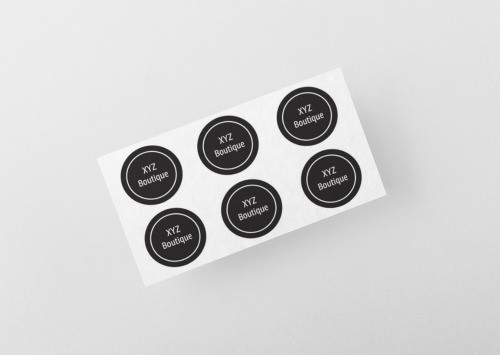
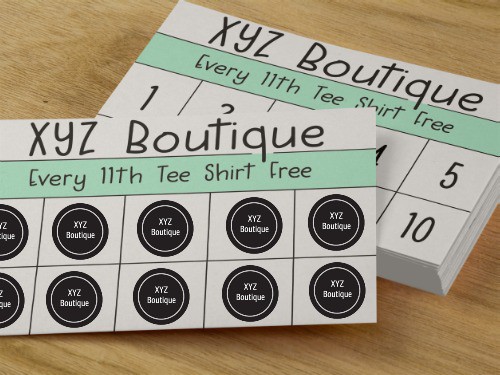
    1. Design business cards or postcards through a printing service like Vistaprint or Moo. I envision them to look similar to these: How to Create a Customer Loyalty Program for Craft Businesses - Great for Silhouette Cameo or Cricut Explore or Maker crafters - by cuttingforbusiness.com
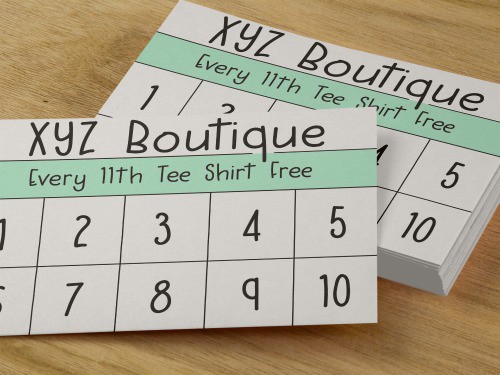
    2. Make stickers with your Silhouette or Cricut using Print and Cut or Print then Cut (or order some).How to Create a Customer Loyalty Program for Craft Businesses - Great for Silhouette Cameo or Cricut Explore or Maker crafters - by cuttingforbusiness.com
    3. Include one loyalty card in each order and the appropriate number of stickers. For example: If a customer earns 1 sticker per $25 spent and places a $100 order, you’d include 4 stickers. As another example: If a customer earns 1 sticker for each tee shirt ordered and they order two tee shirts, you send them two stickers.
    4. When a customer fills their card with stickers, they simply snap a photo of the completed card and send it to you. You give them their reward as a thank you for their loyalty to your small business. How to Create a Customer Loyalty Program for Craft Businesses - Great for Silhouette Cameo or Cricut Explore or Maker crafters - by cuttingforbusiness.com
    How to Set Up the Rewards

    It’s up to you to determine rewards that work well for your business and your customers. A quick word of caution: Don’t make the rewards too difficult to reach or your customers may lose interest.

    Loyalty Program Fraud Prevention

    If you feel that your customers may try to redeem the card more than once (or give it to a friend to redeem), simply have them tear up the card and send you a picture. Additionally, don’t forget that you can always check the orders against your records to make sure that the customer has placed the orders before redeeming.

    Do you teach classes on Silhouette or Cricut instead of selling products? If so, you can still make this kind of loyalty program work. For example, every 6th class could be free with 5 paid classes.

    Love this post? Save it to Pinterest:
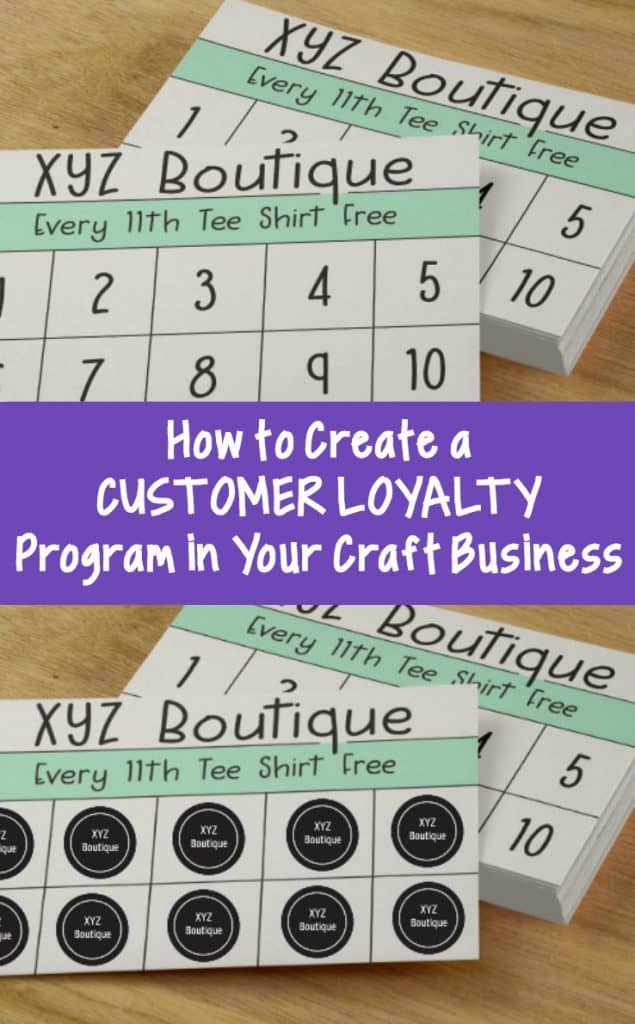
    How to Create a Customer Loyalty Program for Craft Businesses - Great for Silhouette Cameo or Cricut Explore or Maker crafters - by cuttingforbusiness.com

  • 6 Tips for Adding Gift Wrapping Services in Your Craft Business

    With the holiday shopping season starting just weeks away, we should take a quick look at gift wrapping services in your online listings. I highly recommend offering gift wrapping of your listings for sale in time for the holiday season. For one, it is an easy way to increase your average order total. Additionally, here’s a few tips I wanted to share with you:

    My Favorite Gift Wrapping Tips for Craft Businesses

    1. Create a variation (Etsy sellers). One your most popular listings consider creating a variation for your gift wrap services rather than an add on option in a separate listing. For example, if you are selling a small wooden sign you would create a variation called ‘Gift Wrapping’ with two options: ‘No’ or ‘Yes’. The price for the ‘No’ option is the regular price of the product, while the cost of the ‘Yes’ option is the product price plus the gift wrap. For someone who is new to Etsy, they will not know to look in your shop for add ons. Etsy has finally added a built in gift wrap feature! Read more about it here.
    2. Consider using gift wrapping as a promotion. If it won’t take too much or your time, gift wrapping services make for great promotions. Simply advertise ‘Free Gift Wrapping with Purchases of More than $XX.’
    3. Price to sell. It’s entirely up to you how much you will charge for gift wrapping services. For basic small packages, anything from free to $1 and up is acceptable. For larger items, $10 or more may be appropriate.
    4. Share pictures. Show pictures of what your gift wrapped products look like either on your website or social media. This can help those on the fence about gift wrap decide.
    5. Consider offering cards. You don’t send a present without a card, so consider offering cards with a personal message, too!
    6. Make sure the gift wrap complements your branding. While it isn’t necessary to have your name or logo on the gift wrapping; it’s a nice touch to have the gift wrap match the overall feel of your brand.

    Now, get out there and add gift wrapping to your listings before the holiday rush.

    Love this post? Save it to Pinterest:

    Tips About Gift Wrapping Services in Your Craft Business - Great for Silhouette Cameo or Cricut Explore or Maker Owners - by cuttingforbusiness.com

  • 6 Glow-in-the-Dark Materials to Try Out in Your Craft Business

    I’m sure that you are in full swing with your Halloween product making! In my opinion, there’s no better time than Halloween to illuminate up your products with glow-in-the-dark materials. Today, let’s look at what’s available:

    Glow-in-the-Dark Heat Transfer Material (HTV)

    Products to use on: Clothing including shirts, pants, socks, trick or treat bags.
    Where to buy: Happy Crafters has great pricing on glow-in-the-dark HTV. Pricing is about $0.37 an inch at this link. This listing on Amazon costs $0.51 an inch.

    Glow-in-the-Dark Inkjet Heat Transfer Paper

    Products to use on: If you don’t want to use heat transfer vinyl to make apparel, try out glow-in-the-dark heat transfer paper. Just print on your home computer, and use an iron or heat press to transfer the design.
    Where to buy: I used HT glow-in-the-dark transfer paper last year for a personal project and loved it. Pick it up here for $1.50 per 8.5″ by 11″ sheet.

    Glow-in-the-Dark Adhesive Vinyl

    Products to use on: Hard surfaces. Great for decals, plastic trick or treat containers, foam and real pumpkins, glasses, and tumblers.
    Where to buy: H&H Sign Supply has great pricing on glow-in-the-dark adhesive film. It’s $10.50 for 24″ wide priced by the foot. Add $0.10 for custom cuts (like cutting the 24″ width to two 12″ widths).

    Glow-in-the-Dark Paint

    Products to use on: Wood signs, painted canvas products, or fabric paint for tote or clothes. Whether you choose to paint the entire background with glow-in-the-dark paint for a bold effect, or just the details for a more subtle effect, be sure to try it out! A reader recommended Tulip soft brand with freezer paper to make shirts.
    Where to buy: This time of year, big box retailers and craft stores carry several glow-in-the-dark paint brands – don’t forget a coupon! Don’t want to head out of your house? Amazon has several varieties you can see at this link.

    Glow-in-the-Dark Sticker Paper

    Products to use on: Any paper craft like stationary, cards, banners, planner stickers, and more.
    Where to buy: Of all the Silhouette brand materials, the glow-in-the-dark sticker paper is one that I love. (You can use in Cricut, too.) Pick it up at this link.

    Glow-in-the-Dark Glitter & Mod Podge

    Products to use on: Tumblers, mugs, paper crafts.
    Where to buy: Check your local big box craft store with a coupon, or head to this link on Amazon. Personally, I love Martha Stewart’s glow-in-the-dark glitter that you can find here. If you are using Mod Podge to adhere your loose glitter – consider purchasing glow-in-the-dark Mod Podge for extra glow.

    *Note: Pricing may change from time of writing.

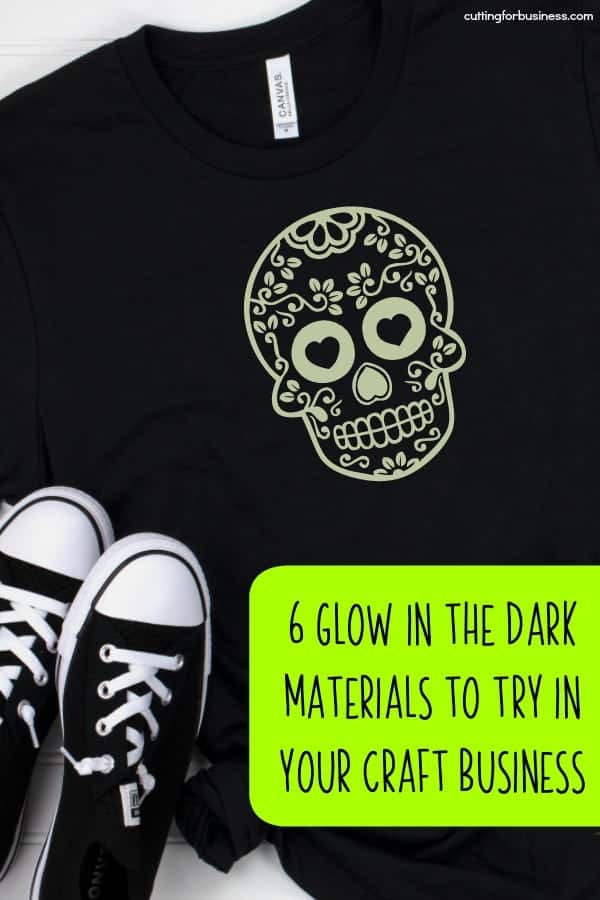
    Psst, wondering about the skull shirt I made in the photo below? It’s so easy: Download the ‘Mexican Skull’ font here (100% free), choose a skull, cut and weed it in glow-in-the-dark heat transfer material, and apply it to your shirt with a heat press.

    6 Glow in the Dark Materials to Try This Halloween in Your Silhouette or Cricut Craft Business - by cuttingforbusiness.com
  • Negative Marketing for Crafters

    Looking for a new-to-you way to market your craft business? Let me introduce you to negative marketing. It commonly used by big box stores, and once I explain it to you – you’ll start seeing it everywhere. Negative marketing sounds bad, but it isn’t. Let’s take a look.

    What is Negative Marketing?

    • Marketing that taps into the buyer’s emotions of anger, rage, annoyance, jealousy, and other negative emotions.
    • Using words with a negative connotation or writing/speaking in a negative voice.
    • Sharing (negative) bad experiences in an effort to connect with customers.
    • Focusing your advertising on the customer’s problems or things they are missing.

    What is Not Negative Marketing?

    • Publicly shaming or making fun of your customers.
    • Encouraging your customers to belittle other customers.
    • Leaving fraudulent negative reviews on your competition’s social media profiles.

    Examples of Negative Marketing in a Silhouette or Cricut Small Business

    I know that negative marketing can be a bit obscure. So, I’ll illustrate with a couple of examples:

    • As a seller of digital cut files, I post this on Facebook: “Don’t you hate it that it takes so long for custom cut files to be designed? Me, too! That’s why my company guarantees custom cut file requests in less than 24 hours! Message me to learn more.” In this example, I’m connecting with the customer and their problem. I focus on the problem (slow delivery of custom made cut files) and offering a positive solution (working with my company which guarantees cut file in only 24 hours).
    • As a seller of handmade gifts, I use this copy in an ad: “Don’t show up without a gift.” with a link to my website. In this example, I’m using negative language (don’t) and alerting the customer to a potential problem: showing up to the party without a gift. Of course, a link is included with my ad to lead customers to my website.
    • As a seller of heat transfer vinyl, I use this wording on a social media network: “It infuriates me when I receive packages that are poorly packed! What about you? Here’s how I make sure your vinyl gets to you safely (with picture of my packaging).” In this example, I’m tapping into an annoyance and anger spot with buyers – poorly packaged craft supplies. Of course, by posting a photo of my awesome packaging, I’m also solving the buyer’s problem.

    Why not give negative marketing a try? Studies have shown that the human mind has a bias towards negativity – and a little bit of it can go a long way. Of course, there’s a fine line between always being mad or a downer and using it sparingly!

    Spread the word and save this post to Pinterest:


    Negative Marketing for Crafters - Silhouette Cameo and Portrait or Cricut Explore or Maker - by cuttingforbusiness.com

  • How to Start a Monthly Subscription Box Paint Club with Your Silhouette or Cricut

    Subscription boxes, DIY, and painted signs are hot right now! Today, let’s look at how you can combine all three into a money maker!

    How to Start a Monthly Paint Club with Your Silhouette or Cricut

    How it Works

    Your customers sign up to receive a monthly ‘project in a box’ on your website or social media page. Each month, you mail them the supplies to complete the project along with step-by-step instructions. Think of it as a painting party in a box!

    What to Include in the Box

    You’ll want to be sure to include all supplies necessary to complete the project. A sample list of supplies may be:

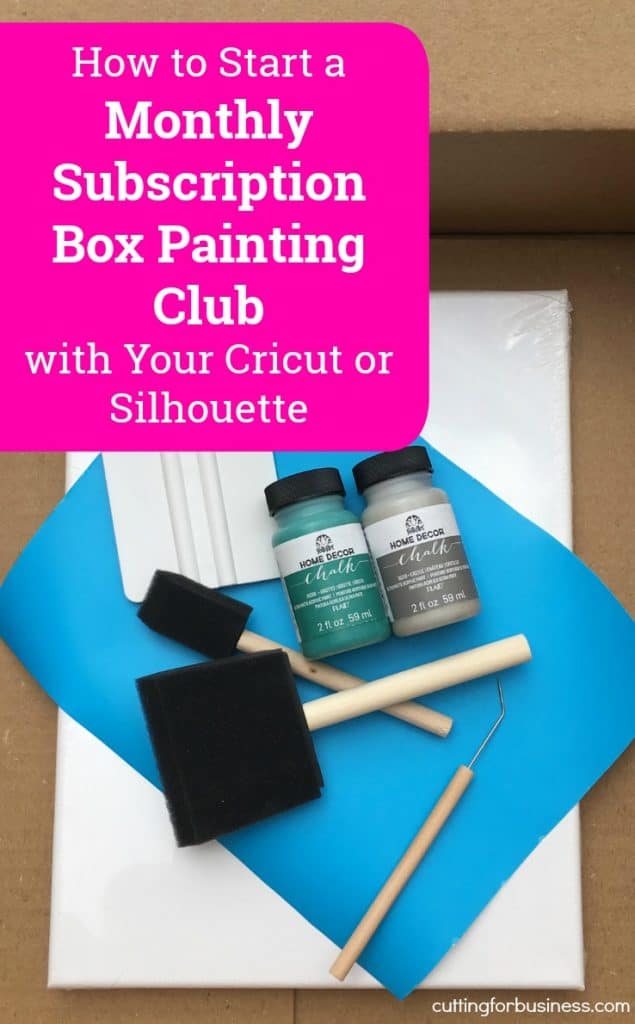
    • Wood or canvas blank. If you are using a wood blank, be sure that it is sanded and ready to paint.
    • A precut vinyl stencil. You can either send the vinyl stencil weeded or have the customer weed it themselves.
    • Transfer tape. Precut transfer tape with backing works well.
    • Paint and brushes or sponges. You could include premeasured paint in a small container that has been well sealed, or send a whole 2 ounce bottle of acrylic craft paint. When Sarah and I held a painting party for 100+ people, we found that makeup sponges and foam brushes were inexpensive and worked well for stenciling.
    • Tools: Weeding tools, vinyl squeegee, square of sandpaper. (Tip: You can use blank plastic cards as squeegees.)
    • Instruction sheet. The instruction sheet is the most important part of the box you will create. You can either include a printed instruction sheet with photos of how to complete each step, or you can include a card with a website address of the video instructions.
    • List of additional or helpful supplies. Customers are able to supply things like water, paper towels, newspaper to cover their workspace, scissors and basic craft supplies.
    • A list of common troubleshooting solutions. While not required, it may cut down questions to you if you include a list of things that commonly go wrong. For example, if the paint bleeds under the stencil, you are using too much paint – and so on.

    Pricing & Payments

    The cost of your subscription paint club boxes are up to you. It will depend on the cost of the supplies in the box. Ideally, I’d recommend a price between $20 and $40 per box per month. Whatever price you decide, the cost of your monthly box should be the same every month. Of course, payment should be collected before the box ships to the customer. Most payment processors (including Paypal) offer reoccurring billing agreements. Don’t forget: Be sure to set up your payment collection date a few days before your monthly shipping date.

    Get Creative

    If you’ve got a scroll saw (or a great supplier for shaped wooden blanks), consider offering shaped wooden blanks in your box.

    Limit the Choices

    Personally, if I were sending out a subscription box every month, I would stay away from personalized designs or color choices. Allowing choices in boxes slows down packing and increases the work involved. Instead, I would choose a design and color scheme that appeal to a wide audience and include it in the box. If the customer hates the paint colors I chose, she could always drop in her local craft store and choose different colors for only a few dollars.

    Another Spin on this Idea

    If monthly subscriptions aren’t your thing and you love this idea, you could take this a bit farther by truly offering a “painting party in a box”. To do this, you’d sell the host enough premade kits to have a party in her home, along with instructions for her on how to compete the project. This would allow her to have her friends over for a paint party night and she will be able to show them how to complete the project.

    Interested in hosting paint parties? Learn more in this article or my ebook.

    Loving this post? Save it to Pinterest:
    How to Start a Monthly Subscription Box Paint Club with Your Silhouette or Cricut - by cuttingforbusiness.com


  • Are QR Codes Dead in Your Craft Business?

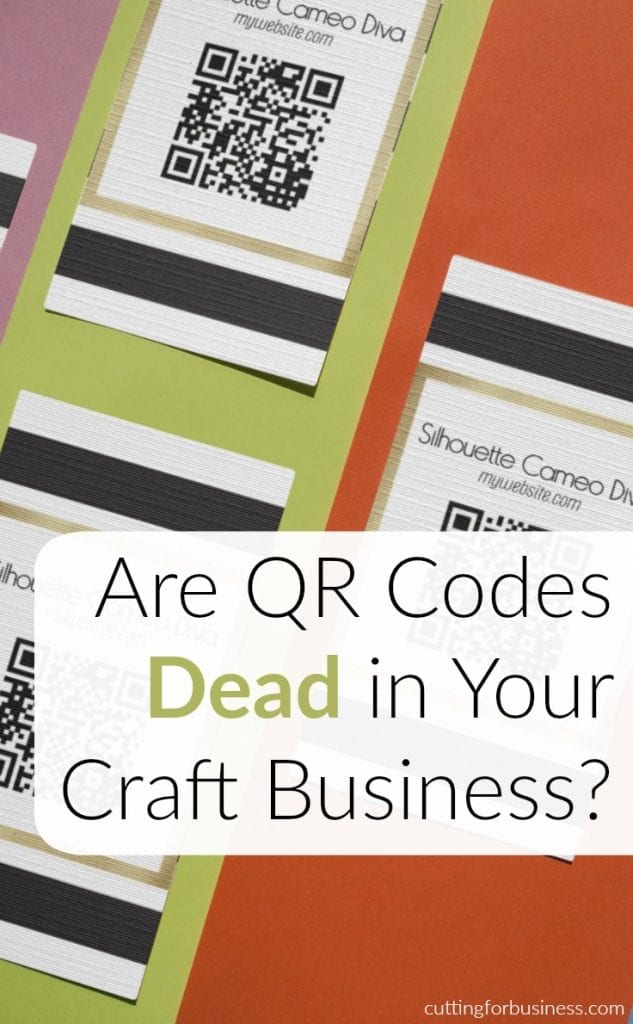
    Recently, I’ve seen a surge of small business crafters both designing products with QR codes and including QR codes on their business cards. So today, I’m answering the question: Are QR codes dead?

    What are QR Codes?

    If you aren’t familiar with QR codes, they are small square codes that you can scan with your phone or tablet and they take you to a link. They debuted in 1994 in the automotive industry to track car parts during the manufacturing process. In 2010, the first smartphone app was released that could scan a QR code was released. QR codes can be put on anything you’d like – including products, business cards, advertising displays, and more. Here’s an example QR code (it’ll take you to the Cutting for Business Facebook page if you are interested):

    What’s Wrong with QR codes?

    They were a great idea that never really took off. Now, onto the problems:

    • The public doesn’t know what they are. QR codes just haven’t caught on – a lot of the general public doesn’t know what they are – let alone how to use them.
    • Most people don’t have an app. In most cases, smartphone users have to download an app to be able to scan a QR code. Experts estimate that most smartphone users do not have QR code scanning apps. (To further prove the point, pull out your smartphone – do you have a QR code scanning app?)
    • It takes too long. In a fast paced social media world, pulling out your phone, opening the app, scanning something, and waiting for a link to load takes too long. It’s much faster to share your social media name and customers can go straight to your social media page(s).

    Are QR Codes Dead?

    So, are QR codes dead? In my opinion, in the small business world – YES. Don’t believe me? Read on:

    So, tell me in the comments: Do you think QR codes are dead? Why or why not?

    Save this post to Pinterest:

    Are QR Codes Dead in Your Silhouette Cameo or Cricut Explore Craft Business? by cuttingforbusiness.com

  • 10 Things to Know About Renting a Commercial Space

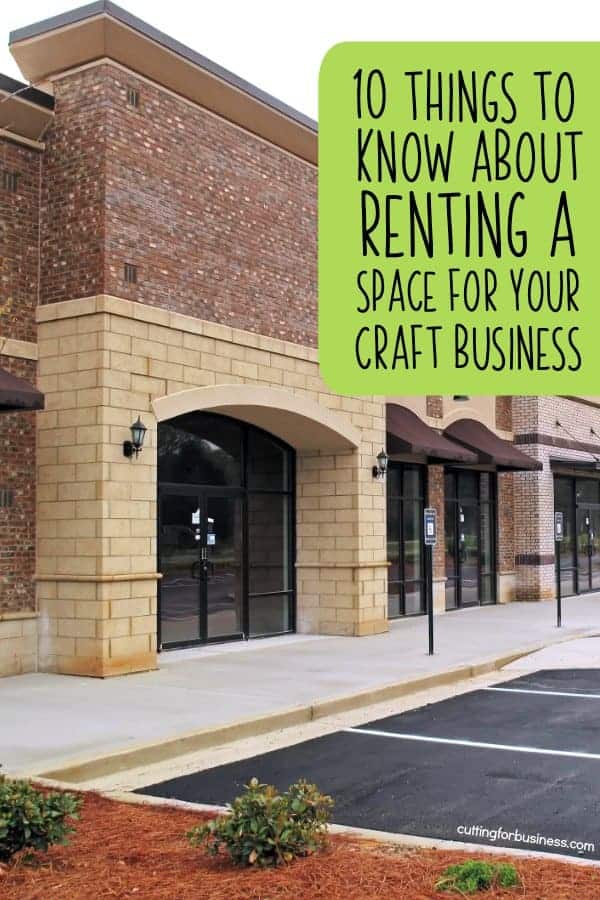
    I keep hearing from Cutting for Business readers that they are in the process of opening their own retail stores or that they are beginning to do research to do so. I’m hearing about everything from wooden sign workshops to vinyl and blank suppliers and even a few gift stores and boutiques! Since I’ve been asked a lot of questions about renting commercial spaces; here are ten things you need to know before you start looking at leasing a commercial space.

    10 Things to Know About Renting a Commercial Space

    1. Lease lengths. Unlike renting a house, most commercial space leases are not for 1 year. It is most common to see lease terms of 3 to 5 years or more.
    2. Lease renewals usually go up in price. Referred to as escalation, if you renew your lease after it expires – the price will usually go up.
    3. Leases are not standard. In the housing market, most leases are standardized. In the commercial world, leases are usually lengthier and tailored to the landlord or space. I’d recommend having a lawyer familiar with commercial leasing review the lease before you sign.
    4. Gross versus net. There’s two varieties of commercial leases: Gross and net. In gross leases, everything you pay is bundled into one price that you pay monthly. In net leases, you pay a rent amount plus taxes, insurance, and CAM. It is important when looking at spaces to know which you are looking at.
    5. Common area maintenance (CAM) or Triple Net (taxes, insurance, and CAM). In addition to the monthly lease rate, most commercial leases require a monthly CAM or Triple Net. This amount goes to maintaining common areas such as hallways, parking lots, elevators, and property taxes and insurances.
    6. Prepaid rent. In many cases, new businesses moving into their first space are required to prepay a certain amount of rent.
    7. Maintenance. Before you sign on the dotted line, be sure you know who is responsible for building maintenance. In some commercial spaces, the landlord handles repairs – in others – the lessee takes care of them. For a new business, it can be quite expensive to fix something large that breaks – like an AC system!
    8. Build outs. What you see when you tour the space is likely what you’ll get. In most cases, improvements to the space (called the build out) are done at your expense; in others you may receive an allowance. Also, the landlord may require that you use their contractors.
    9. Signage. Be sure to ask what signs are required and what parameters must be followed. For example, some landlords require signs in a certain color scheme, while others may require lit signs. (Commercial signs can be very expensive.)
    10. You’ll pay even if your business closes. If your business fails, you are still required to pay rent and maintain the space. Some leases and landlords will allow you to sublet (rent it to someone else) the space – while others will not.

    My final words of advice in renting a commercial use space? Negotiate! Everything is negotiable in commercial real estate! And, it’s best to use a real estate agent that is familiar with commercial rentals.

    Tell me in the comments, do you hope to rent a space in the future?

    Was this post informational? Save it to Pinterest!

    10 Things to Know About Renting a Space for Your Craft Business - Great for Silhouette Portrait and Cameo or Cricut Explore or Maker crafters - by cuttingforbusiness.com

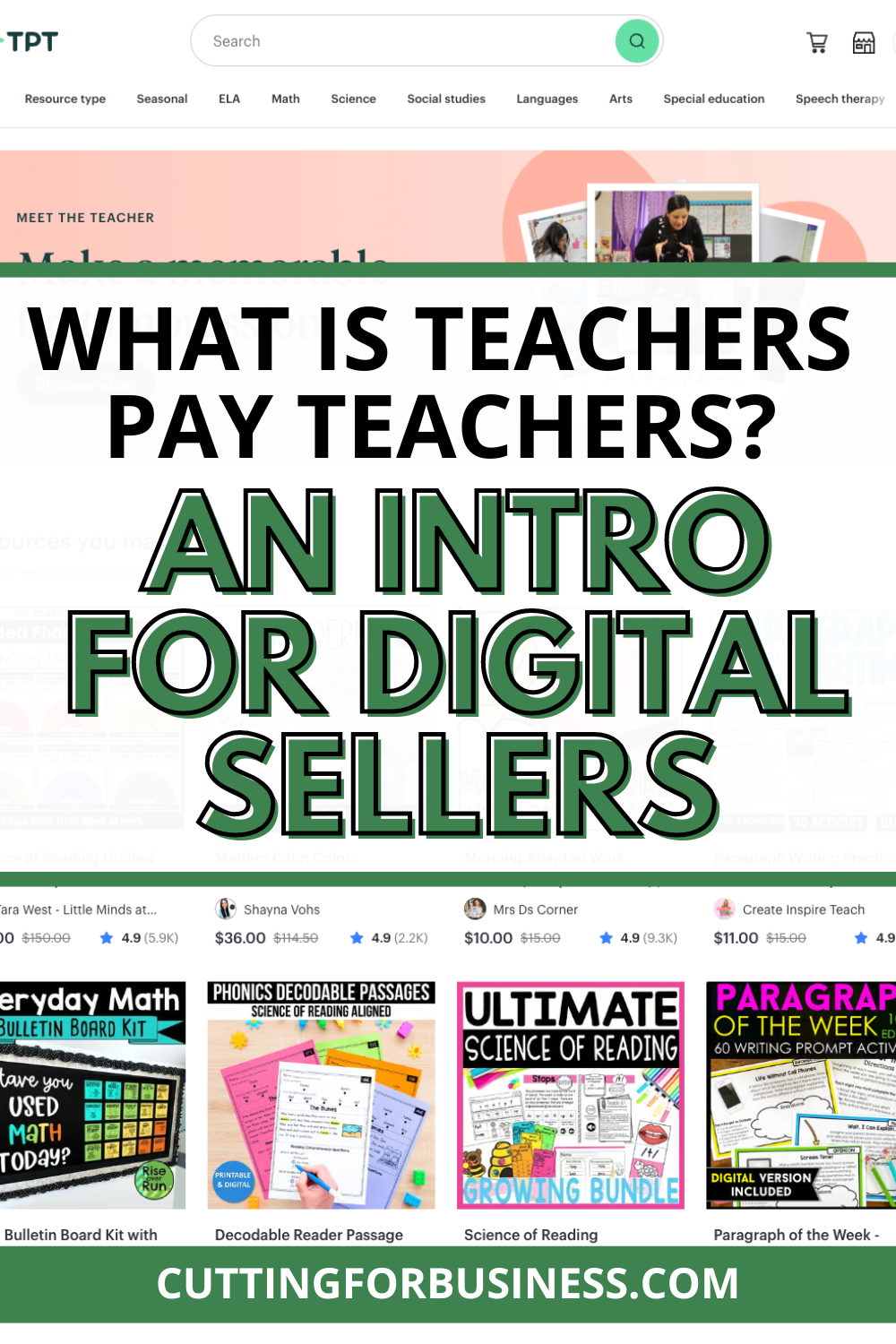
  • What is Teachers Pay Teachers – An Intro for Digital Sellers

    With back to school time here, teachers are likely well into prepping their classrooms and materials for their new students. If you sell digital goods, consider opening a shop at Teachers Pay Teachers.

    What is Teachers Pay Teachers - An Intro for Digital Sellers - cuttingforbusiness.com

    What is Teachers Pay Teachers?

    As the name suggests, Teachers Pay Teachers is an online marketplace for teachers to sell digital goods to other teachers. But, they also have publisher accounts where non-teachers can sell to teachers and the educational community. Teachers Pay Teachers (known as TpT, for short) boasts a marketplace with over 7 million active members in 2024.

    What Can You Sell at Teachers Pay Teachers?

    The Teachers Pay Teachers marketplace features digital goods for educators. Here’s a sample list of what’s for sale on the site:

    Lesson Plans and Units
    Interactive Notebooks
    Center Ideas
    Task Cards
    Activities
    Games
    Common Core Resources
    Classroom Decor
    Cut Files
    and much more…

    How Much Does It Cost to Sell at Teachers Pay Teachers?

    There are two different selling arrangements on Teachers Pay Teachers.

    For Teacher Sellers

    Two different plans; Basic is free – Premium is $59.95 a year. Here’s a chart from the Teachers Pay Teachers website outlining the differences: 

    Screenshot from Teachers Pay Teachers - cuttingforbusiness.com

    For Publishers

    If you are not a teacher/educator and want to create educational related digital resources, you can join Teachers Pay Teachers as a Publisher. Publisher accounts cost $29 to create and there is a 50/50 split on the sales of your digital goods.

    To create a Publisher account, you have to reach out to the Teachers Pay Teachers support team.

    Screenshot from Teachers Pay Teachers - cuttingforbusiness.com

    More Information

    Teachers Pay Teachers has an awesome help section of their website that will answer all basic questions related to selling (and buying) on the site. Click here, then click the “Help” link located along the top of the page.

    Tell me in the comments, will you try selling on Teachers Pay Teachers?

  • 5 Tips to Approach Schools for Custom T-Shirt Orders

    Do you make t-shirts or apparel in your craft business? As a new school year is about to start, have you considered selling shirts or other gear to schools?

    If selling to schools interests you, here are 5 tips on how to approach schools with your products.

    5 Tips to Approach Schools for Custom T-Shirt Orders - cuttingforbusiness.com

    How to Approach Schools for Custom Tee Shirt Orders

    1. Reach out via phone. Starting to work with schools can be as easy as picking up the phone and calling the office number for more information. Once you get someone on the phone, simply introduce yourself and ask who you would need to talk to for more information. For example, “Hello, my name is Christine and I make custom tee shirts. I’m looking for the contact person to discuss the shirt needs for XYZ School.” Once you get that person on the phone, try to arrange an in person meeting to show off the designs you’ve made for the school. These could be physical samples (shirt made with heat transfer vinyl, rhinestones, etc) or high quality photo mockups.
    2. Contact through social media. Most schools have a Facebook or Instagram page. Again, reaching out is as easy as introducing yourself and asking for contact information. Don’t forget to search for the school’s PTA/PTO page, as it may be separate from the main school’s social media accounts. If you don’t score a deal with the school itself, you may be able to work out something for the PTA/PTO to buy directly.
    3. Talk to your child’s teacher. If you have a child at the school already, you’ve already got a foot in the door. You can ask your child’s teacher for the contact information of the person in charge of buying shirts or other apparel. To take this idea further, you could gift a sample shirt to the teacher when you are asking for contact information. Once the teacher wears it – you’re likely to at least get orders from other teachers.
    4. Make a sample and take it to the office. While it may cost you a small amount of money to make a sample, the benefit of people seeing your work in person is priceless. Simply drop into the office and leave the sample shirt along with a business card and ask that they get given to the person in charge of purchasing. Personally, I think it is best to attach your business card or custom tag to the shirt so that they don’t get separated.
    5. Don’t go for the “top”. Most schools are likely to have a deal with a screen printer/embroiderer that currently provides shirts for the school. Consider approaching teachers who head up clubs, groups, or sports. For example: The yearbook staff, the art club, the chess club, the drama group, the French club, and so on. It is likely harder for these smaller clubs to get shirts because they won’t meet the minimum order amounts for larger wholesalers – but will need large enough orders to make it worth your time.

    What Happens After You’ve Got the School’s Interest?

    In some cases you’ll need to request the permission of the school, district, or school board to use their logo(s). You’ll want to keep a written record of any permissions or licensing given to you. Also, don’t be surprised if the school wants to pay through a purchase order written directly to your business. This is common. It does mean that you’ll need to be a registered business to be able to get paid.

    And don’t forget – shirts aren’t the only thing you can sell to schools. There’s headbands, shorts, sweatpants, hoodies, decals, and more! The tips I listed above will work for any products.

  • 7 Christmas in July Sale Ideas for Craft Businesses

    In 1940, a movie called Christmas in July was released. The retail world embraced the idea of celebrating and hosting Christmas sales during the summer – because this was a slow time for many.

    If you need a good pick me up in your Silhouette or Cricut craft business, consider holding a Christmas in July sale. Today, I’m giving you some Christmas in July sale ideas.

    7 Christmas in July Sale Ideas for Craft Businesses - cuttingforbusiness.com

    When Should I Hold My Christmas in July Sale?

    You can hold a Christmas in July Sale anytime in the month of July. You’ll notice that most retailers host their sales after the July 4th holiday.

    Do I Have to Have Christmas Products on Sale or Available?

    No, you can host a sale on any products you would like. However, being able to sell Christmas products in July is great, too!

    7 Christmas in July Sale Ideas for Crafters

    Offer a Discount

    Offer a substantial discount in your store or offer substantial discounts on certain items in your store.

    Offer Free Products

    Advertise a free product with a minimum purchase of $XX. Examples of inexpensive products include decals (personalized or generic), keychains, earrings, headbands, cupcake toppers, or greeting cards.

    Give a Gift Certificate with a Minimum Purchase

    Give a gift certificate or coupon code with a minimum purchase. This is a great way to encourage shoppers to return at a later time – like the actual Christmas holiday. For example, spend $100 and get a $15 gift certificate good in the months of November or December. I love this tactic because it encourages customers to return at a later time.

    Offer a Bounce Back Coupon

    Similarly, offer a bounce back coupon in the order to return again at a later time. I’ve written about bounce back offers in another article.

    Offer Free Shipping

    Consider extending free shipping to customers. With Amazon’s Prime membership leading the marketplace, many customers now balk at having to pay shipping costs.

    Host a Giveaway

    Host a giveaway for your sale. The easiest way to accomplish this is everyone who buys from you on a certain day will be automatically entered into your giveaway.

    Offer Christmas Products

    If you’ve already got your holiday products designed and ready to sell, you can offer an early preview sale for everything Christmas related.