Category: Growing Your Business

  • How Partnering With a Charity Can Help Your Craft Business

    If you are looking for a way to boost your sales or get your Silhouette or Cricut small business out of a sales rut, consider partnering with a charity. A relationship with a charitable organization can get your small business in front of new customers while doing good in your community or the world. Let’s look at how this works.

    Ways to Partner for a Craft Business to Partner with a Charity

    • Donate a portion of your sales to the charity.
      • You could donate a portion of your sales on all products for a specific time period.
      • You could donate a portion of your sales of a specific product for a specific time period.
    • Donate products to the charity to resale for profit or use in their facility.
    • Sponsor an event hosted by the charity. Be sure that your business name is used in marketing materials for the event.
    • Volunteer at events hosted by charities. (You may even be able to wear shirts with your business name!)

    How to Find the Right Charity

    • While some experts will advise you choose a charity related to your business, this can be harder for a craft business. If you can’t find something directly related, I’d recommend that you choose something close to your heart. When you choose a meaningful charity, you’ll be more into the process and you’ll likely get better results. Plus, choosing a charity that personally affects you allows you another way to connect with customers.
    • After you’ve browsed and chosen several charities, do research on them. See where their funds come from and how they use donations. I recommend Charity Navigator or Charity Watch as great tools to research potential charities.
    • If you’d prefer to support a specific cause, sites like Kiva (my favorite!), Global Giving, YouCaring, or GoFundMe can help you find one.

    Tips for Getting the Most from Your Charity Partnership

    • Time, supplies, and money donated for charity can all be written off in your small business taxes. Consult your accountant for instructions on how to do this.
    • Since you are a small business, consider partnering with a small or local charity. Ideally, you can promote each other through social media posts and local efforts.
    • Be sure to advertise your charitable donations on social media and in your online listings for customers to see. To make a connection with customers, explain why you have interest in the charity.
    • Have a policy for future partnerships. Before you go, I wanted to leave you with this last tidbit: Once your business is seen as a charitable partner; you may get more and more requests to work with charities or events. Having written policies or information sheets on how you work with charities can save you a lot of headaches in the future.

    If you are looking to fundraise after a tragedy or disaster – head to this post. Does your small business support a charity? Share it in the comments!

    Save this post to Pinterest:

    How Partnering With a Charity Can Help Your Silhouette Cameo or Cricut Explore Craft Business - by cuttingforbusiness.com

  • Marketing: How to Donate Handmade Wall Decor for Free Advertising

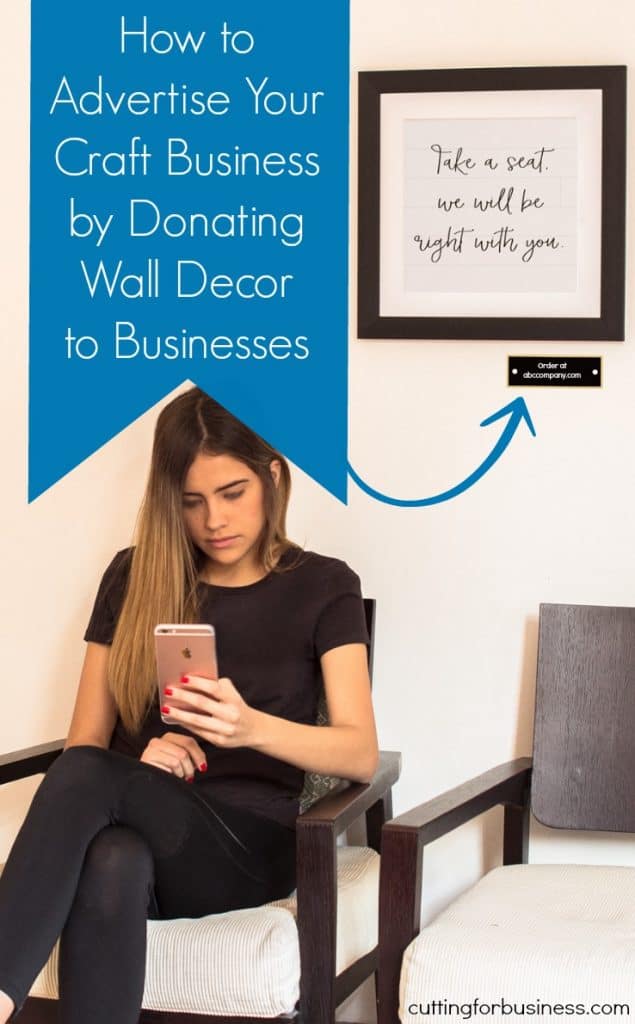
    Remember that post from a few weeks ago about a creative way to promote your business while wishing your friends a happy birthday on Facebook? (If you missed it – read it here.) Today’s post is similar because I’m sharing another sort of sneaky way to get free advertising by donating wall decor. I have to say, this isn’t my original idea – I’ve seen it in action at my children’s doctors office!

    What’s the Idea and How Does it Work?

    The general idea is that you find a small business that you can create wall decor to fill their walls. In exchange for donating the decor, a small plaque is placed below or beside the decor with your business name and website information. When customers of the small business admire your decor, they have the option of reaching out to you and purchasing.

    What Businesses Might be Ideal?

    For this kind of marketing, it’s best to stick with “mom and pop” type shops. Think restaurants, barber shops, salons, real estate offices, lawyers, tax preparation offices, and anywhere else where customers physically visit the location. Once you locate a good space, reach out to the owner, let them have say in the design, create the products, and hang them with pride along with a small sign or plaque for customers to reach you or order.

    Love this marketing idea? Share it on Pinterest:

    Creative Marketing Idea for Silhouette Cameo and Cricut Small Business Owners - How to Donate Handmade Wall Decor for Free Advertising - by cuttingforbusiness.com

  • 5 Ways to Stop Multitasking in Your Craft Business

    Multitasking is defined as the behavior of doing more than one task at a time. Since small business owners wear so many hats, they often fall into the pitfalls of multitasking!

    Today, let’s first look at some published articles about the downfalls of multitasking – then I’ll share my tips of how I quit multitasking.

    5 Ways to Stop Multitasking in Your Craft Business - cuttingforbusiness.com

    Great Articles About Multitasking

    Ok, I think you’ve got the point – now let’s look at how I quit multitasking.

    How I Stopped Multitasking

    Time Blocking

    Just like you, I have a full schedule. I work full time on this blog, Cutting for Business. I also shoot photography jobs several nights a week. I have four kids – who each have extracurricular activities most nights of the week.

    The only way I can accomplish everything each day is through time blocking.

    This means that I write out my day in time blocks. For example, I block out an hour for laundry, an hour to check emails, an hour to create cut file designs, and so on. When the hour is over – I stop the task and move to the next. All of my block times have singular, specific tasks in them.

    I’ve written more about time blocking.

    Scheduling Make Up Time

    This was a mistake I made when I first started time blocking. block scheduling – I didn’t leave time to catch up on anything that I didn’t get done in the scheduled block. I now block off make up time daily.

    Turn Off the TV

    I’m guilty of having the tv on if I’m home by myself. However, when I’m working, I turn the tv off so I am not trying to focus on more than one thing at a time.

    Put the Phone Away

    During my work time, I turn on Do Not Disturb on my phone. My phone settings allow phone calls from each of my kids cell phones, schools, and immediate family members to get through – but everything else is sent to voicemail.

    I also find it helpful to let immediate family members know my working hours and ask them to contact me outside of those hours.

    Sign Out of Social Media

    Let’s face it: Social media is easily to get sucked into. First, it’s a cute video of a cat. Then, some dance viral dance videos, then an ad for Amazon. Without realizing it, you look down and you’ve spent 45 minutes mindlessly scrolling.

    To prevent wasting time on social media, I routinely sign out and only stay signed in when I am actively on a network.

    If you are finding it tough to sign out of social media, use your phone’s settings to put a limit on social media apps like Facebook or Instagram.

    These 5 things have made it easy for me to stop multitasking. I’ve noticed that by focusing only on one task at a time, I get more done in less time.

    Tell me in the comments, are you a multitasker?

  • Bounce Back Offers in Your Silhouette or Cricut Business

    Ever heard the saying that the cheapest customer to get is a repeat customer? It’s an old saying – and it is entirely true. Today, we are looking at bounce back offers, an easy way to get a repeat customer in your Silhouette or Cricut small business. And one that is used a lot in the corporate world – but not as much in the small business world.

    What is a Bounce Back Offer?

    A bounce back offer is a discount given to customers who place an order in your Silhouette Cameo or Cricut Explore small business. It differs from other sales or promotions, because the customer must purchase something to receive the offer.

    What is the Goal of a Bounce Back Offer?

    The goal of a bounce back offer is to get your current customer to place another order in the future by giving them a discount.

    How Do You Give a Customer a Bounce Back Offer?

    There are a number of ways to offer a bounce back coupon to your customer:

    • For in person sales (craft shows or fairs): Simply put a card with a discount code in the customer’s bag during checkout.
    • For online sales (your website or other marketplace): Email your customer a coupon code immediately after placing their order online. If you are selling on Etsy, go to “Promote”, “Coupon Codes”, then select the “Thank You Coupon” option.

    That’s it – a simple way to turn a customer into a repeat customer. Thinking of adding a customer loyalty program to your business? Head to this post for an easy to implement one.

    Save this post to Pinterest:

    Bounce Back Offers to Get Repeat Customers in Your Silhouette Cameo or Cricut Explore Small Business - cuttingforbusiness.com

  • List of Out of the Box Places to Set Up Shop this Holiday Season

    When you own a small craft business, you can sell your goods wherever you can. Whether you choose Etsy, your own website, craft shows, or social media currently, there are always other alternatives. Today, I’m going to introduce you to another idea – small, fleeting popup shops.

    What is a Pop Up Shop?

    A pop up shop is a temporary retail space. For large stores, pop up shops are generally set up in busy mall spaces, reception areas of large office buildings, and empty strip mall locations. But, you don’t have to be set up in giant, expensive spaces to have a pop up shop.

    Why are Pop Up Shops a Good Idea?

    Pop up shops are easy ways to reach new customers and test out new products. My favorite part about pop up shops are that the costs associated with them is small. When making arrangements to use a space, pitch it as a service for the customers that will shop in the pop up. Posing yourself as an asset to the owner of the space may get you a space to use for free for a few hours. If you can’t negotiate a free space, a small percentage of your sales may get you the space you need to host a pop up shop.

    What do You Need to Host a Pop Up Shop?

    You’ll need your products, a proper display for your products, tables, a credit card reader, business cards, and bags to put merchandise in. Think of your popup shop as a solo craft show display.

    Places to Hold a Pop Up Shop

    With a little creativity – and maybe some smooth talking – you can host a pop up shop wherever you can get permission. Here’s some ideas to start your brain storming:

    • Your house
      • Similar to hosting a holiday market in your home, set up your shop and invite a few friends over to shop.
    • A friend or family member’s house
      • Take your products with you and set up in someone else’s home. Bring a few snacks and make a night out of it!
    • A large office building
      • Pop up shops in large office buildings are a great way to reach a number of people at the same time.
    • Hospital break room
      • If you have the means to get into a hospital break room for a few hours, consider offering doctor and nurse themed products for sale.
    • School
      • The front office staff at your local school might love a pop up shop with school or teacher related products. If you can plan your pop up shop around teacher appreciation week, it’ll be even more popular!
    • Real Estate Office
      • Grab your display and head to your local real estate office. Offer products that are real estate themed or those that agents can purchase as gifts for their clients.
    • Salon
      • Grab your products and head to a salon for a few hours in the afternoon. Consider products that pamper or decor related to relaxing – or stick with stylist themed items.
    • Barber
      • A barber shop demographic is slightly different from a salon, because men tend to frequent them. If you can schedule a pop up shop with gifts before Mother’s Day or Christmas you may do very well. (I mean, stop in for a haircut and buy a gift for the wife for Mother’s Day with no extra effort!? It’s a win-win!)
    • A Cafe or Deli
      • Know a cafe owner? Set up shop during the busy lunch period!
    • Bars/Breweries/Wineries
      • If you’ve got a craft beer brewery or a local winery in town, arrange to set up a shop for a few hours inside on a busy weekend afternoon. Make your merchandise themed.

    Themed Merchandise for Your Pop Up Shop

    As I’ve mentioned above, the space that you choose for your pop up shop will dictate the type of products you sell. When planning what products to take to your pop up shop, ask yourself: What type of person frequents this location?

    Now, get out there – set up a pop up – and make lots of money! Where can you think of to host a pop up shop? Leave your suggestion in the comments.

    Was this post helpful? Save the image below to Pinterest.

    List of Out of the Box Places to Set Up Shop this Holiday Season - Silhouette Portrait or Cameo and Cricut Explore or Maker - by cuttingforbusiness.com

  • How to Design Smarter on Vinyl on Cups, Tumblers, and Mugs

    I’ve mentioned on the Cutting for Business blog before that I really don’t think that vinyl on a mug is the best product to sell. I know that some sellers have had a great luck doing them – while others get customers complaining that the vinyl is simply a “sticker” or that it peels off easily. Instead, I would rather see everyone doing sublimation on mugs which makes the design permanent, washable, and able to withstand the microwave. If you don’t know how mug sublimation works, head to this post.

    How to Design Smarter on Cups and Mugs

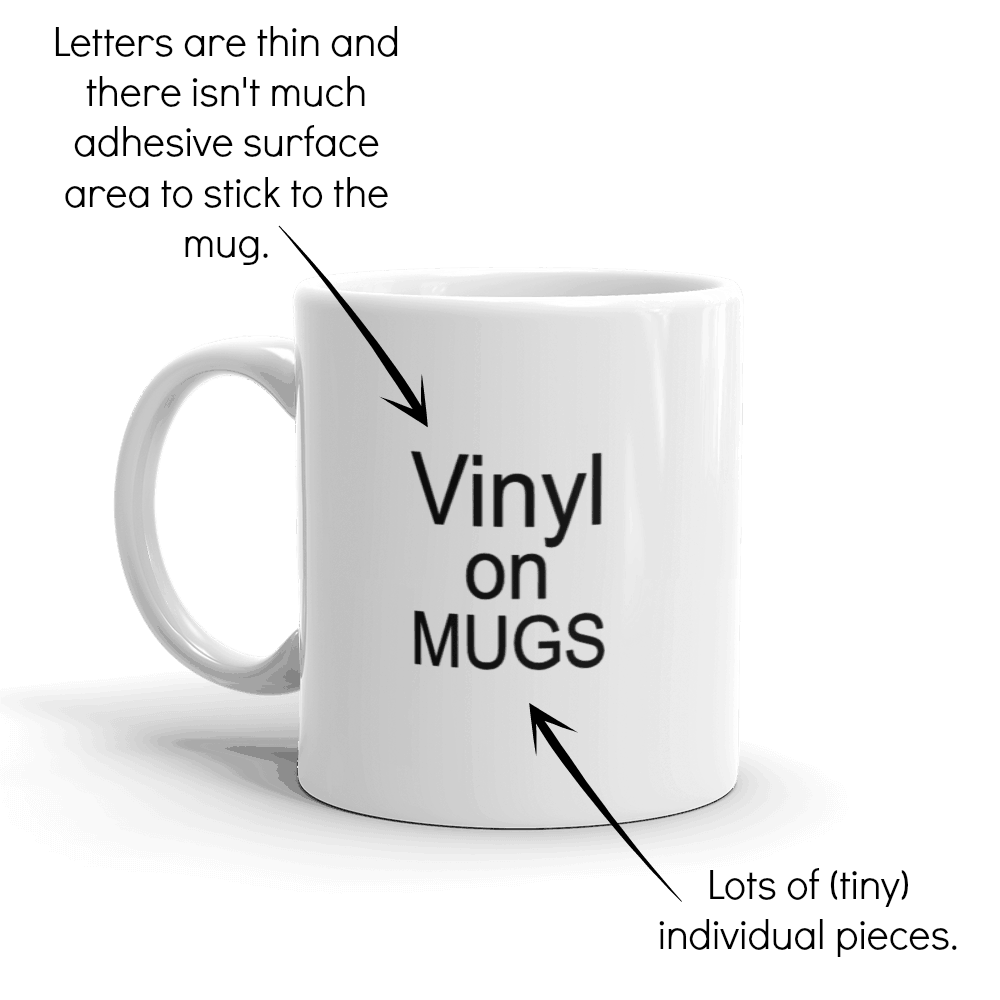
    If you do want to do vinyl on mugs, you just need to learn to design smarter. Let’s look at an example – which mug is a smarter design?Vinyl on Mugs - Designing Smarter with Your Silhouette Cameo or Cricut Explore - by cuttingforbusiness.comVinyl on Mugs - Designing Smarter with Your Silhouette Cameo or Cricut Explore - by cuttingforbusiness.com

    These two sayings are the same, however, there are big differences. Here’s why the second one is a better design choice: Vinyl on Mugs - Designing Smarter with Your Silhouette Cameo or Cricut Explore - by cuttingforbusiness.com Vinyl on Mugs - Designing Smarter with Your Silhouette Cameo or Cricut Explore - by cuttingforbusiness.com

    When designing (or shopping for designs) to put on cups, mugs, and tumblers using vinyl you can make smarter decisions by looking for designs that are one piece and those that have thicker or chunkier letters. When you have more surface area of adhesive against the blank – the better the design will stay on. For maximum design life, don’t forget to follow the vinyl manufacturer’s recommendations for curing time before use.

    Remember, better designed products lead to happier customers – and more money in your pocket!

    Need care cards to include with your mugs, cups, or tumblers? Download them free here.

    Was this information helpful? Save this post to Pinterest:

    How to Make Your Vinyl Designs Last Longer on Cups and Mugs - A great read read for Silhouette Portrait or Cameo and Cricut Explore or Maker - by cuttingforbusiness.com

  • Hours of Operation Decals – A Way in with Small Businesses

    I’ve talked before about wholesaling on the Cutting for Business blog – see here and here. In fact, working with other small businesses is my favorite type of arrangement for Silhouette and Cricut owners, because it eliminates a lot of headaches of customer service. Also, wholesale orders tend to be for larger dollar amounts – and everyone loves that!

    One issue I hear about from Silhouette and Cricut business owners is that they don’t know how to approach small stores to get orders from them. While visiting stores and pitching sales ideas can work well, I’m going to tell you about another today.

    One thing that nearly all brick and mortar stores have in common is that they need a sign with their business hours. In my area, some small businesses don’t have signs with their hours on the front of their store; while others have handwritten signs on blanks from the hardware store or old peeling vinyl decals. Here’s where you come in – you can offer to create and install a vinyl decal with their store hours. You’d charge a reasonable amount ($15 to $25) – and start building your relationship with the store. Be sure after you apply the vinyl that the store owner knows what else you can create – and how to reach you. This simple project could lead to more window signage, or various other creations for small business. If it doesn’t lead to anything else, you’ve made a profit from a simple vinyl decal install.

    Tips for Hours of Operation Decals

    • Use easy to read fonts that can be read at a distance.
    • Cut samples ahead of time and give store owners a choice of only two or three fonts.
    • Keep it simple – no need for flourishes or images.
    • White adhesive vinyl works well on tinted store windows.

    Now, get out there and talk to your local florist, real estate company, attorney, notary, clothing boutique, and more!

    Save this post to Pinterest:
    Hours of Operation Decals - A Way in with Small Businesses - For Silhouette Cameo or Cricut Explore Owners - cuttingforbusiness.com

  • Active versus Passive Income – What’s the Difference?

    For the rest of the week, we are going to look at active versus passive income. Most Silhouette and Cricut small businesses are classified as active income businesses, but there is no reason that a small business owner can’t also collect passive income.

    What is the Difference Between Active and Passive Income?

    Active income is income that you receive for selling a product or a service. Typically, you are “hands on” (hence, active) when you earn active income. Here are some examples of active income:

    • Working a 9 to 5 job is considered active income. You receive money for completing tasks.
    • Selling at a craft show is active income, you make products, set up shop, and sell products to customers.
    • In general, selling online is active income because you create the products, market them, answer customer questions, and package and ship them. There is a component that is passive, because if you sell online – you are often making money 24 hours a day, 7 days a week.

    In contrast, when you earn passive income you are generally “hands off”. You are not doing anything for the money. Here are some examples of passive income:

    • Investments are passive income. You invest one time and receive income based on that investment.
    • In the craft world, cut file designs and ebooks are generally considered passive income because you design or write them once – then sell them digitally which is hands off.
    • Silhouette and Cricut small businesses can take advantage of affiliate programs to earn more passive income. This style of program works by using special links that a company has given to you to promote or suggest their products.

    In my mind, there is nothing better than passive income to accompany the active income you are already making. Now, why did I tell you all this? Tomorrow, we are going to talk about affiliate programs.

    Save this post to Pinterest:
    Active versus Passive Income in Your Silhouette or Cricut Craft Business - What's the Difference? - by cuttingforbusiness.com

  • How to Earn Affiliate Income in Your Silhouette or Cricut Business

    Yesterday, I defined active versus passive income in your Silhouette or Cricut small business. While most businesses are active, you can have a passive component. How? Through the use of affiliate programs!

    What are Affiliate Programs?

    As I mentioned yesterday, affiliate programs pay affiliates for promoting or recommending products. As you’ve seen here on the Cutting for Business blog, I often recommend products and services. When you click my referral link and purchase, I get a small percentage of the sale price. It’s important to note that the buyer doesn’t pay more from clicking on the link. Since affiliate income works in a hands off manner, it is considered passive income.

    How to Incorporate Affiliate Programs in Your Craft Business

    There are a few different ways to start using affiliate programs in your small business. Here’s an overview:

    • Identify products that your buyers would be interested in purchasing. You’ll need to make sure that your recommendations make sense! Here’s some examples:
      • If you sell customized shirts, you could recommend coordinating bottoms like leggings, shorts, or pants that match or complement your designs. Similarly, if you sell customized infant bodysuits, you could promote coordinating accessories like a bow or headband. An affiliate program through Etsy is available on the Affiliate Window platform (see link below) if you want to promote other handmade goods.
      • If you sell planner accessories or stickers, you could suggest planners to your buyers. As an example, Erin Condren offers a referral program where you can earn money on each planner related sale you make on their site.
      • If you sell cut files, you could recommend cutting machines, vinyl, paper, or fonts. Cricut has an affiliate program, as does Amazon.
      • If you sell party decor, you could recommend coordinating party supplies like tablecloths or cups to match your decor line. Affiliate programs at party suppliers might work well.
      • If you sell wooden signs, you could suggest coordinating room decor to your buyers. Affiliate programs like Wayfair or Amazon might be a good fit.
    • Apply for the affiliate program. Usually, you fill out a quick application and wait a few days to be approved.
    • Use a special link to promote a product or service.
    • Earn passive income each time someone makes a purchase through your link(s).

    Where to Find Affiliate Programs

    The best way to find affiliate programs is to go to the site you want to promote and search for affiliate programs. Another easy way is to join affiliate program networks. Here’s a few of my favorites:

    1. Shareasale
    2. Affiliate Window
    3. Amazon
    4. Commission Junction

    Once you join a network and are approved, simply browse or search for companies and products to promote.

    Where to Put Affiliate Links

    You can use affiliate program links on social media, your website, or even within your Etsy listings.

    Required Disclosures

    One more important note about affiliate programs. The FTC requires that you disclose that you are using affiliate links. Here’s a link to read more.

    Affiliate programs are a great way to bring in passive income to your Silhouette or Cricut small business. Tomorrow, I’ll share concrete, real life examples of using Amazon’s affiliate program in your craft business.

    Save this post to Pinterest:
    How to Earn Affiliate Income in Your Silhouette or Cricut Business - by cuttingforbusiness.com

  • How to Sell Advertising Space in Your Silhouette or Cricut Craft Business

    This week, I’ve covered a lot of information about passive income and affiliate programs. As we wrap up our talks about passive income, let’s take a quick look at selling advertising space to other companies.

    Option 1: Ads on Your Website

    Why Add Ads to Your Website?

    If you have a standalone website (not Etsy or another marketplace) you can add advertisements to your website. In this type of passive income, you get paid each time that an ad is shown or clicked. The ads shown are generally based on the visitor’s search history. As an example, you can see ads on this website at the top of the any page and in the sidebar on the right hand side.

    How to Implement Ads on Your Website

    The easiest way to get started with ads on your website is through Google Adsense. Simply visit Google Adsense and sign up for a free account. After being approved as a publisher, you’ll install a piece of HTML code on your website and ads will be shown. After installation, there is no maintenance and you’ll be paid monthly.

    Thinking to Your Future Ads

    As your website grows and gets more traffic, you might be able to join an ad network. Ad networks install code on your website and manage the relationship between advertisers and your website. When joining an ad network, you typically make more money per ad – but they have minimum traffic requirements.

    Option 2: Sell Ad Space to Businesses

    If you don’t want to put random advertisements on your website, you can also sell ad space directly to advertisers in newsletters, social media, or your website. In this case, you look at the amount of people in your audience, set a price, and set a duration for the ad length. You then find an interested business and charge them for you to advertise or mention them. Let’s look at a few examples:

    • If you make wood signs and have a large Instagram following, you could mention the supplier where you get your wood for signs cut. In this case, you’d get paid to mention your supplier.
      • “I’d never be able to get so many signs done if it weren’t for @ABCWOODCUTTER. Here’s what just arrived from them.” #ad
    • If you are active with local customers, you could team up with local service providers like realtors, cleaning services, or babysitting services.
      • On a flyer advertising an upcoming sign party, advertise for a local ‘Kid’s Night In’ at the local trampoline park. Mention that while the kids are jumping, Mom and Dad can be making signs.

    Still looking for more ways to make money in your craft business? Head to this post on multiple streams of income in your business.

    Was this post helpful? Save it to Pinterest.

    How to Sell Advertising Space in Your Silhouette or Cricut Craft Business - by cuttingforbusiness.com