Category: Starting Your Business

  • Silhouette or Cricut Business Start Up Costs

    I’ve had a lot of business owners-to-be ask me how much the typical start up costs are for a Silhouette or Cricut home based business. Today, I’m offering a general list of items to consider if you are starting a business with your die cutting machine. The lists below are general overviews to give you an idea of the things you will need to buy to start your business.

    General Supplies

    • Silhouette Cameo ($270) or Silhouette Curio ($220) or Cricut ($250)
    • Cutting blades (Silhouette $8 each, Cricut $3.50 each)
    • Cutting mats (Silhouette: $9 each, Cricut: $6 each)
    • General craft supplies
    • General office supplies (paper, folders, envelopes, etc.)
    • Shipping supplies (tape, label paper, packing materials, boxes, shipping scale – $50)
    • Computer and printer – varies greatly
    • Silhouette Studio Upgrade (Designer Edition $25 or read more about Business Edition)
    • Accounting program (about $15 per month)
    • Packaging materials – (about $100)
    • Business cards and advertising materials ($50)
    • Supply storage – varies ($100)
    • Camera – varies greatly

    Supplies

    For Adhesive Vinyl Crafters

    • Adhesive Vinyl – Purchase in rolls for cheapest pricing. Generally, around $1.30 per yard. You should estimate that you’ll need several colors to begin creating.
    • Transfer paper or tape ($35 for an industrial roll)
    • Weeding tools ($10)
    • Blanks for products ($200)

    For Garment Crafters

    • Heat transfer vinyl – Purchase in rolls, about $7 per yard – specialty materials cost more. You should estimate that you’ll need several colors to begin creating.
    • Heat press –  ($225) – It’s a must if you are selling products. Read more about that in this post.
    • Weeding tools ($10)
    • Blanks for products ($300)

    For Scrapbook, Card, Paper Crafters

    • Papers – cost varies greatly ($100)
    • Paper crafting tools – spatula, paper cutter, glue ($100)

    Remember, you may have some of the necessities on hand, especially if you are already crafting as a hobby. Next week, I’ll show you how I started my small business without any debt – and very little cash on hand.
    Silhouette or Cricut Business Start Up Costs by cuttingforbusiness.com

  • 4 Steps to Start a Craft Business Without Debt

    Want to start a craft business but short on cash? While you may have heard the saying, “You’ve got to spend money to make money.” You certainly do not have to go into debt to start a craft business.

    Ideally, you’ll have some money set aside for your new business, but if you don’t (or if you don’t have enough) skip putting your purchases on a credit card and follow these steps instead.

    Today, let’s look at 4 steps to start a craft business without debt.

    How to Start a Craft Business without Debt - cuttingforbusiness.com.

    4 Steps to Start a Craft Business Without Debt

    1. Identify one craft product you want to sell and buy the supplies for just that product. Be selective and focus on a product that you are comfortable making, and one that you know you can sell for a profit. Then, buy the supplies to make just that product. Before you go out shopping, raid your craft stash at home. You may already have the supplies you need.
    2. Make and list your product. To save money on listing fees, consider selling locally or through social media.
    3. Immediately reinvest your profits in supplies to make more of the same product. After your product sells, Put aside all profits from your sales and reinvest those profits in supplies to make more products. Put your new products online for sale.
    4. Repeat, repeat, repeat. Repeat steps 2 and 3 and continue to repeat, repeat, repeat! You’ll be able to slowly watch your inventory and profits grow.

    An Example of How to Start Your Craft Business Without Debt

    Let’s look at this in action, with a simplified example.

    1. I’ve identified that I enjoy making t-shirts with heat transfer vinyl. I run through the numbers:
      • One t-shirt costs $6.
      • The roll of vinyl costs $10, but will make 10 shirts. So, the vinyl cost for one t-shirt costs $1.
      • This means the cost for each t-shirt is $7.
      • I already make t-shirts for my family and have a heat press and additional supplies needed.
    2. I list my t-shirt for $24 on a local buy/sell group. The buyer picks up the t-shirt from my house, so no shipping costs are incurred.
    3. My profit from this shirt is $17. This means that I am able to buy two more t-shirts, with $3 left over.
    4. I make two additional shirts and sell them in the same local buy/sell group. My profit this time is $34.
    5. I’m able to reinvest that $37 ($34 in profit + $3 left over from the first sale) for another 6 shirts. Once I sell those 6 shirts, I’ve got an additional $144 in profit. I can then reinvest my $144 in supplies and continue this process. In time, I’ll have enough money to eventually expand my product line and even buy in bulk to lower my costs.

    This method will work for most craft products. You just want to be armed with patience, as it may take longer to see results over putting everything on a credit card and paying interest.

    Coincidentally, I started my business without any debt and have slowly watched it grow and grow. Soon enough, you’ll be able to look back – debt free – and be amazed at how far you have come.

    Before you go, I’ll leave you with one of my favorite quotes:

    “It does not matter how slowly you go as long as you do not stop.”

    Confucius
  • Grammar Guide for Crafters: How to Make Names Plural in Craft Projects

    Today, we are going to have a quick refresher on how to make names plural in craft projects.

    I see so many errors online in products for sale. Quite frankly, misspelled products are pretty embarrassing!

    Grammar Guide for Crafters: How to Make Names Plural in Craft Projects - cuttingforbusiness.com

    How to Make a Last Name Plural

    Q: When should you make names plural?
    A: When you are talking about more than one person with the same last name.
    How: In most cases, to make a name plural you add an S.

    Examples: Johnson becomes Johnsons. Smith becomes Smiths. Hall becomes Halls.

    Exceptions: To make names that end in S, X, Z, CH, or SH plural you add ES.
    Examples: Hernandez becomes Hernandezes. Mitch becomes Mitches. Holmes becomes Holmeses.

    Don’t forget: You never use an apostrophe when you are talking about more than one person with the same last name.

    When to Use an Apostrophe

    Q: When should you use an apostrophe?
    A: An apostrophe shows possession, and is only used when you are referring to something that someone owns.
    How: To show possession add ‘S. This is called a singular possessive.

    Examples: Mrs. Schinagl’s house is beautiful. Mr. White’s car is blue. Ms. Patterson’s neighbor had a baby.

    Exceptions: When a last name ends in S, you can either add ‘S or just an apostrophe (‘). Grammatically speaking, both are correct.
    Examples: Pattersons: We ate at Mrs. Pattersons’s house or we ate at Mrs. Pattersons’ house. Sanders: We rode in Mr. Sanders’s car or we rode in Mr. Sanders’ car.

    Q: What if you need to use a plural and an apostrophe in the same name?
    A: First, make the name plural; then make it possessive. This is called plural possessive.

    Example: When writing about the house of the Roberts family: We went to the Robertses’ house. First I made the name plural (Robertses) then I added an apostrophe to show that I was talking about their house.

    Plural versus Singular Possessive versus Plural Possessive

    Another example before you go:

    Last name: Robinson.

    The Robinsons invited us to a party at their house. (Only plural, refers to more than one person with the last name Robinson.)
    We went to Mrs. Robinson’s house. (Singular possessive. Talking about a house owned by a person.)
    We went to the Robinsons’ house. (Plural possessive. Talking about more than one Robinson and their house.)

    It’s a Good Idea to Verify with the Customer

    When creating personalized products for customers that have exceptions related to their names, it is always a good idea to ask specifically how they want their name to appear. For example, the Jones family may not want the name to read The Joneses. As an alternative, you can avoid the plural by using The Jones Family.

    What About a Grammar Checker?

    Need help with grammar or other proofreading in your craft business? I’ve got you covered in this article: How Crafters Can Use Free AI Tools as Grammar Checkers.

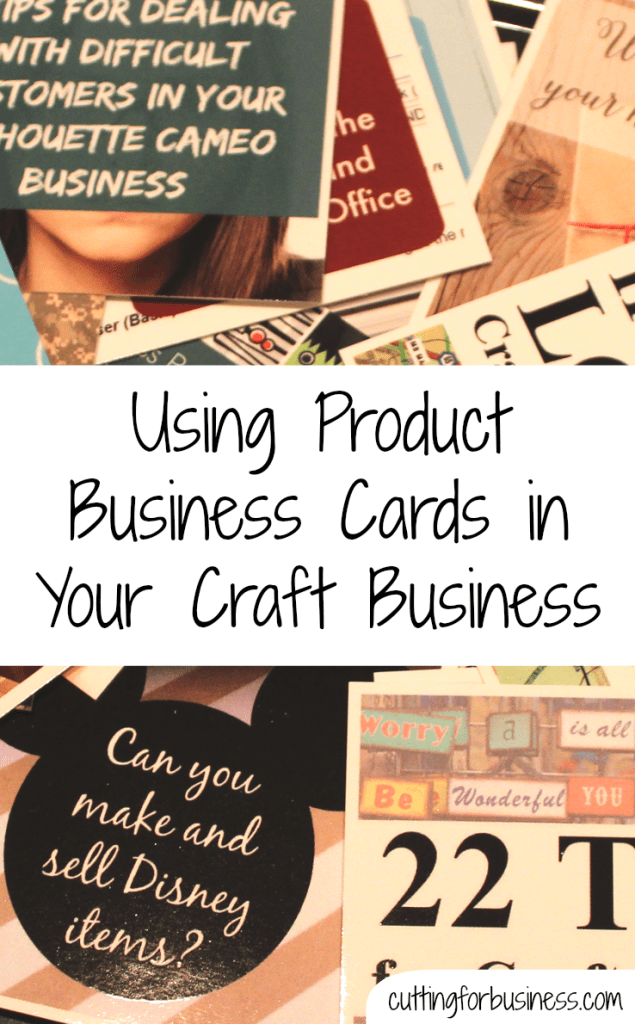
  • Product Based Business Cards in Your Craft Business

    What is a product based business card? I’ll be honest, I just made that term up – but I think it is fitting for what I am going to show you today. I debuted my latest business card designs at the All Things Silhouette Conference – and everyone LOVED them.

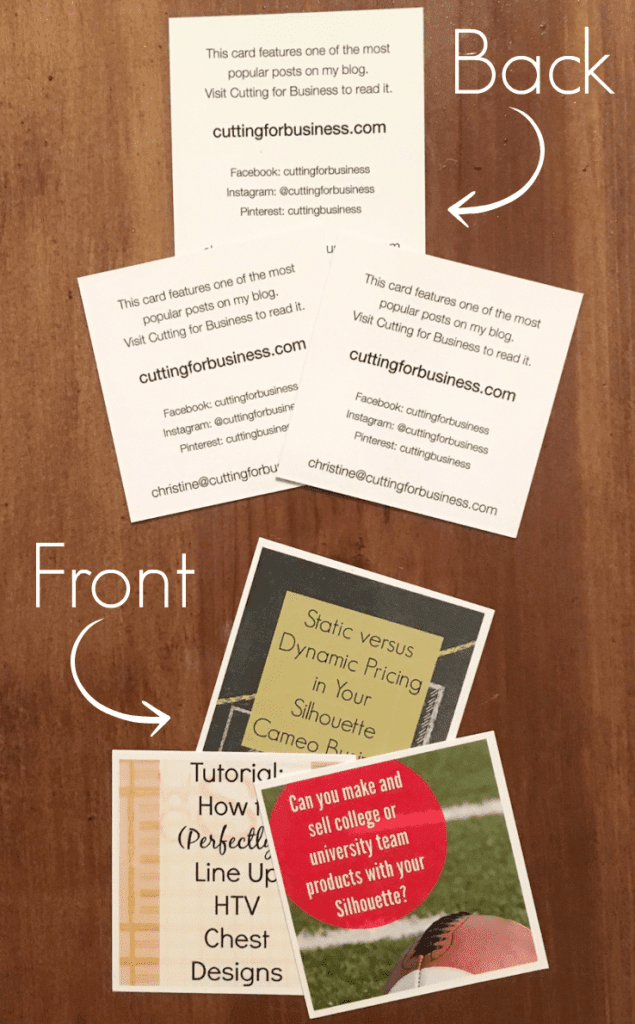
    So, what made them special? Well, each of my business cards has a different image on them. In my case, I put a different blog post on each of them and my contact information on the other side. But, for your small craft business, you can put a different product on each and your contact information on the other side. Why would you do this? Well, when customers go to craft shows they pick up lots of business cards. When they get home, they may not remember what business sells what product. However, if you have a photo on your card of one of your products, your customer will know exactly why they grabbed your card.

    Below is a photo of a few of the cards.

    Product Based Business Cards in Your Craft Business by cuttingforbusiness.com

    How did I do this you ask? I used Moo.com’s square business cards. Moo allows you to upload up to 50 different designs to use on your business cards. This sounds like a daunting project you say? It actually only took about 20 minutes because Moo can link into your Instagram account. Since Instagram photos are already square, they are perfect for Moo’s square business cards! Then, I just chose the images I wanted to use, looked over the online proofs, and placed the order. Pricing is dependent on what options you choose for your card. Head over to Moo and make your own product based business cards!

    Product Based Business Cards in Your Craft Business by cuttingforbusiness.com

  • Can You Layer Glitter HTV on Glitter HTV?

    There’s always an ongoing debate about whether Silhouette or Cricut vinyl crafters can layer glitter heat transfer vinyl on top of glitter heat transfer vinyl. So, what’s the answer?

    Can You Layer Glitter HTV on Glitter HTV? - cuttingforbusiness.com

    Can You Layer Glitter HTV on Glitter HTV?

    If you try to layer glitter HTV on glitter HTV, you will find out that it works. But, it won’t last. Most manufacturer application instructions state that you should not layer glitter HTV on glitter HTV.

    I like Siser brand heat transfer materials, so I headed to their website to look at their glitter heat transfer vinyl specifications. On this page, they specifically note:

    “Can be used as a top layer on other materials  •  Not recommended to be layered on top of itself”

    So, Siser recommends you not layer glitter HTV on top of glitter HTV. They also recommend that you not put any other heat transfer material on top of glitter – it should be the top most layer.

    What are Knockout Designs?

    If you are making designs where you need to layer glitter HTV on top of glitter HTV, you need to learn how to design knockout designs.

    Knockout designs are designs that have several layers. Rather than layer the materials on top of each other, you subtract the layers from each other in your software. This allows you to save materials and have a better made product because each material layer adheres directly to the blank product.

    Siser’s Application Instructions Cheat Sheet

    Siser has shared a cheat sheet on their website that I have printed, laminated, and hanging in my DreamBox.

  • Static Pricing vs Dynamic Pricing for Craft Businesses

    Want to make more money selling the products you already have online? Of course you do, who doesn’t?

    Today, let’s talk about static pricing vs dynamic pricing. This may sound complicated, but you come across dynamic pricing in the real world every single day.

    Static Pricing vs Dynamic Pricing in Your Craft Business - cuttingforbusiness.com.

    Basic Definitions of Static Pricing vs Dynamic Pricing

    Static Pricing

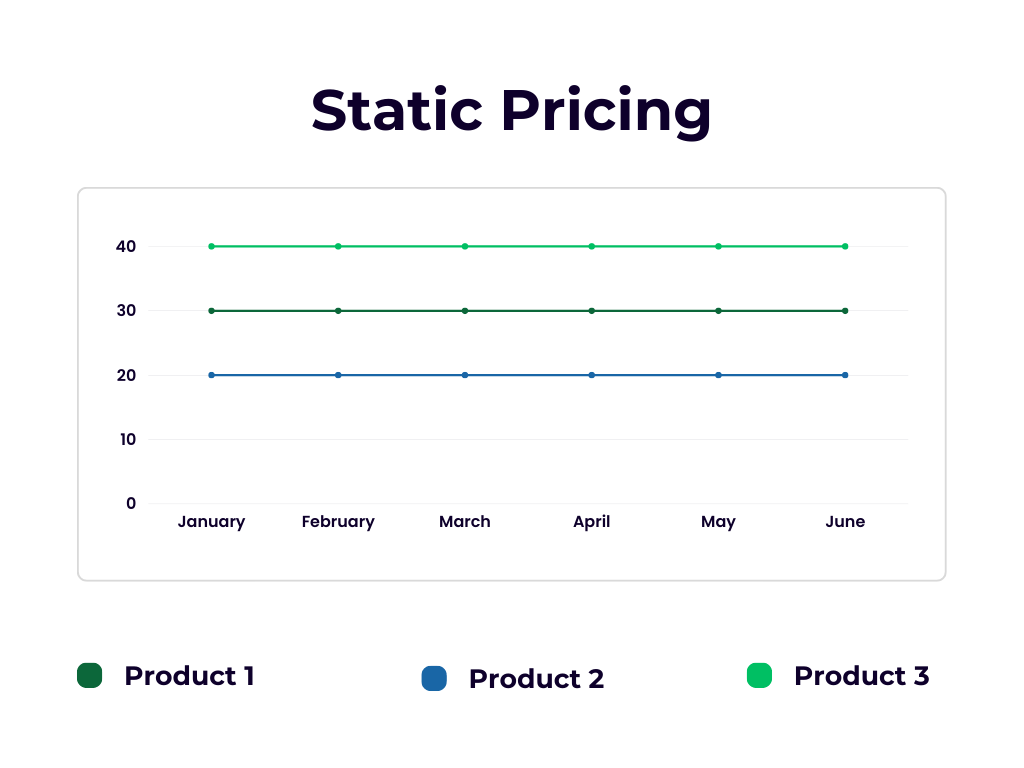
    A price is determined and the price stays at a set rate the entire time a product is for sale.

    Dynamic Pricing

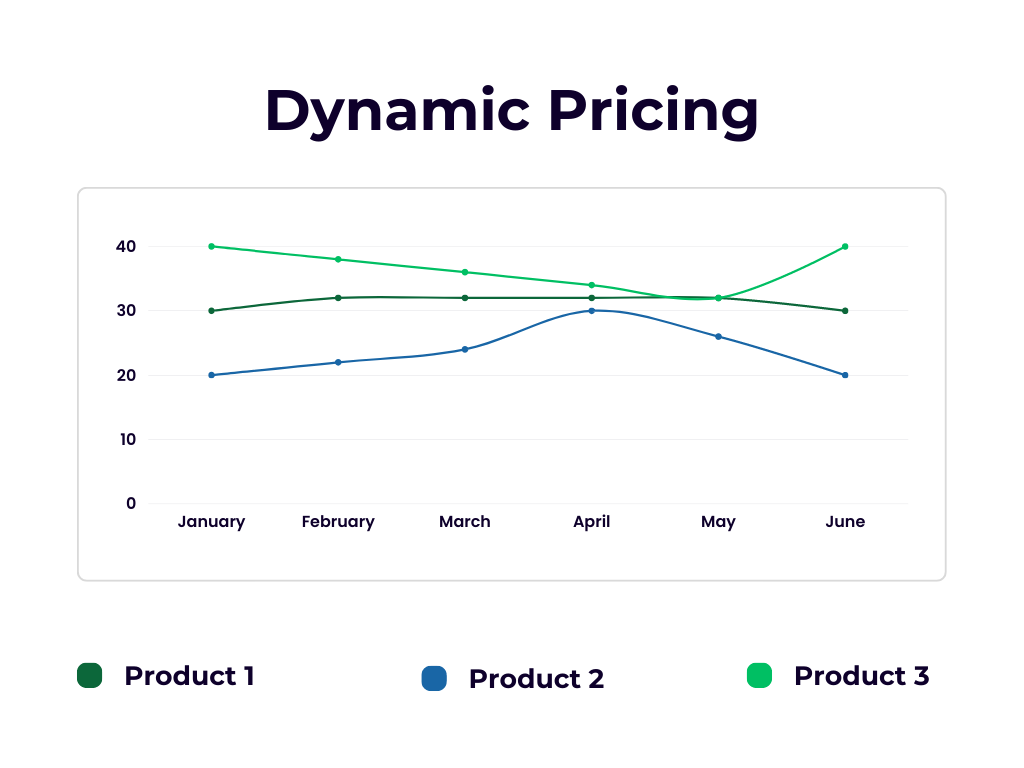
    In contrast to static pricing, dynamic prices fluctuate based on the demand of the product.

    Real Life Examples of Dynamic Pricing

    Like I mentioned above, we are surrounded by dynamic pricing in our every day lives.

    • Hotels – As the amount of rooms available for certain days decrease, the prices for the remaining rooms are increased.
    • Airfare – As seats on planes fill up, the pricing for the remaining seats are increased.
    • Sporting Events – The more in-demand a sporting event is, the higher the price for tickets (World Series, Superbowl, or Stanley Cup)

    Examples of Static and Dynamic Pricing in Your Craft Business

    This is what a chart looks like when a small business owner uses static pricing. You’ll see that no matter what time of year it is, the business owner offers the same price on their product.

    This is what a chart looks like when a small business owner uses dynamic pricing. You’ll see that in busier periods, the business owner raises the price of the product. In contrast, in slower times, the price is decreased.

    How to Use Dynamic Pricing in Your Craft Business

    It’s easy to implement dynamic pricing in your craft business: When your business is busier or your product is in demand: Raise your prices. When your business is slower or your product is not in demand: Lower your prices.

    The Benefits of Dynamic Pricing

    Obviously, the benefit of dynamic pricing is that you increase revenue and profits by raising the prices during the right times. The change is quick and easy in your Etsy or online store, and no other details with your product changes. I call that a win for craft business owners!

    Real Life Craft Business Examples

    Dynamic Pricing for an SVG Cut File Bundle

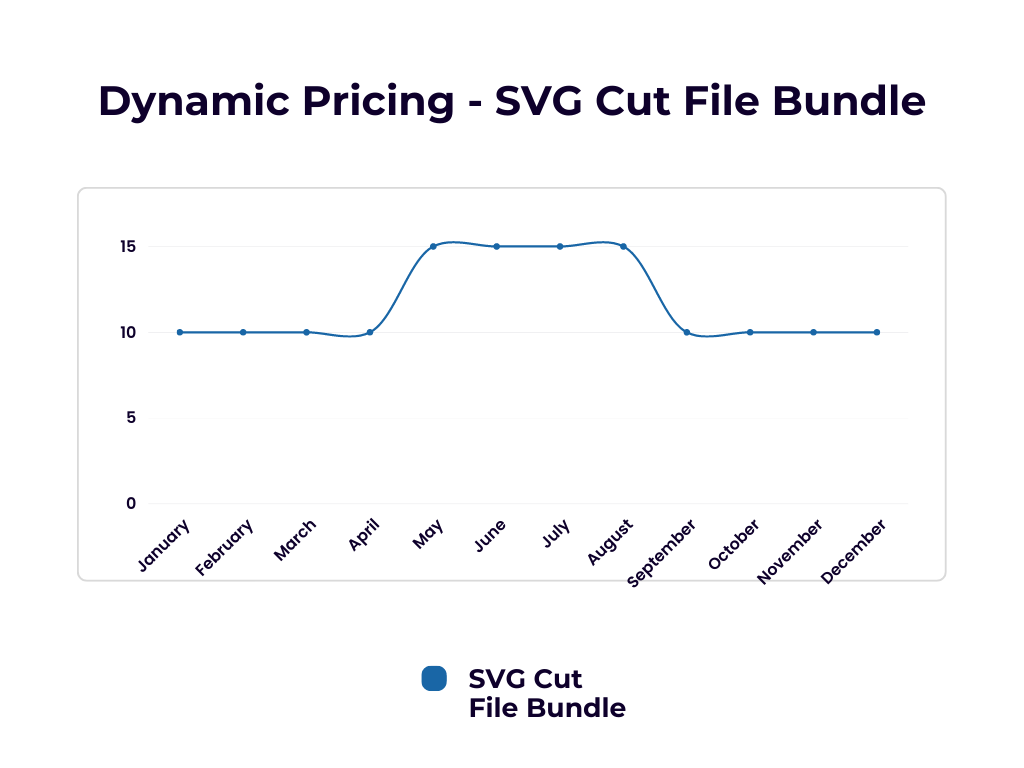
    Let’s take a look at another chart. Let’s pretend that I’m selling a bundle of SVG cut files with a summer theme. During the months of January through April, this bundle is not going to be in demand. I set the price at $10.

    But, during the summer months (May through August), I price the bundle at $15 when the SVG cut file bundle is more in demand.

    Look at the chart:

    Dynamic Pricing for a Christmas Sign

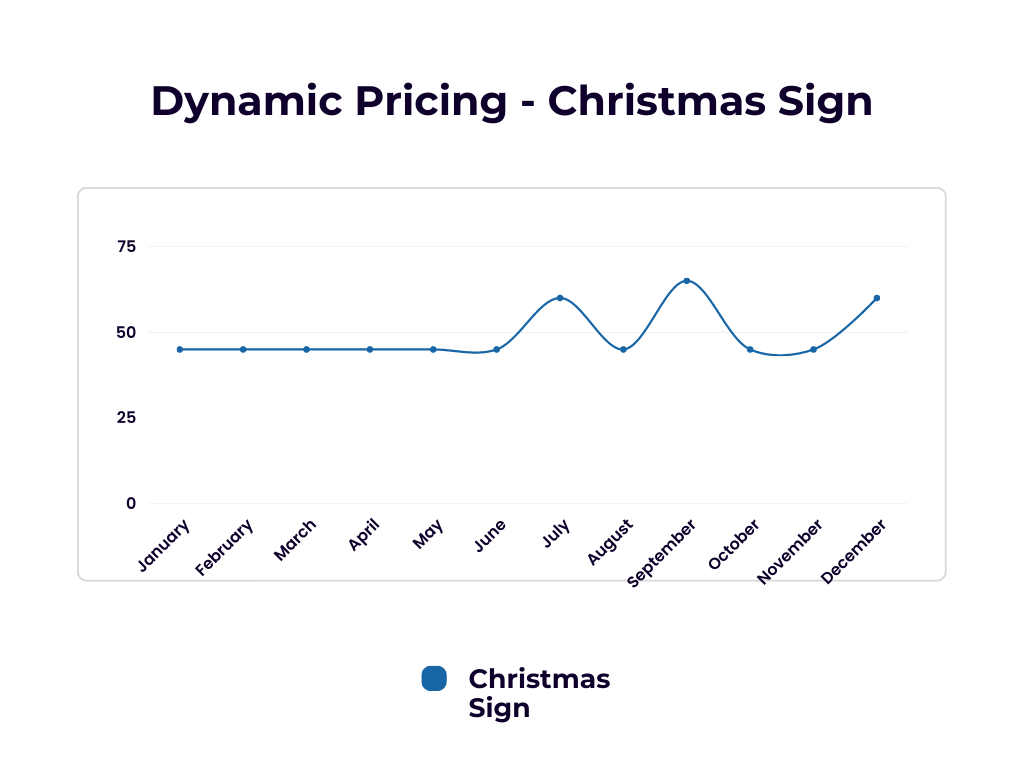
    Instead of an SVG cut file bundle, let’s look at a wood Christmas sign. In this case, in the month of December, you’ll see I’m selling my sign for its highest price $60. You’ll also see a high price in July, during my Christmas in July sale. But look at September. You’ll notice an increase in pricing when my sign design went viral and it was in high demand – so I raised the price. Finally, in January, I lowered the price to clear out the extra signs I had.

    Look at the chart:

    Do You Need to Announce Price Changes to Customers?

    Could you imagine if every store you shop at sent an email or posted on social media when they increased the price on something? Oh my! You would be inundated with messages and posts!

    No, you do not need to announce price changes, or even justify your pricing to customers. If a customer has an issue with the price, they aren’t the customer for you.

    However, if you want a bump in sales before you raise your prices – you could offer some information to your customers. For example, you could post on social media: “Tomorrow is the last day to get XYZ widget for $40.”

    Need help pricing your products? Read an article on How to Price Your Handmade Products.

  • The SBA and Your Craft Business

    Since Cutting for Business began earlier in the year, I’ve had many readers email or message me asking if I could point them to specific procedures for registering their business or incorporating a business in their state or county. Unfortunately, state and county procedures and laws vary greatly, as do the procedures for small businesses. One of my favorite resources is the SBA or U.S. Small Business Administration. Founded in the 1950’s, the purpose of the SBA is to offer loans, counseling sessions, and other assistance to small business owners. The SBA website is packed full of helpful information for starting a business – including free video courses – and the SBA has Small Business Development Centers, Veteran’s Business Outreach Centers, and Women’s Business Centers through the US and US territories. The staff at the SBA Centers provide free and confidential business planning, startup assistance, and financial grant information. I urge you to get in contact with your local SBA for state or region specific information.

    Links to help you find your local SBA Center/Resources:

    Have you visited your local SBA Center?

    Save this post to Pinterest:

    The SBA and Your Silhouette Cameo or Cricut Small Business - by cuttingforbusiness.com

  • How to Find Your Craft Business Product Niche

    Should you be a jack-of-all-trades (perhaps, a jane-of-all-trades!) or a specialist in one? I love crafting, and I’m sure that you do too, but as sellers we don’t need to sell every type of product we’ve ever created.

    Read on for information on how to find your craft business product niche.

    How to Find Your Craft Business Product Niche - cuttingforbusiness.com

    What is a Niche?

    A niche is a product specialty that you develop over time, and many sellers become well known because of their niche.

    For a real life example, I like to compare niches to doctors. If you are pregnant, you’ll likely see a professional who has obtained extra education in maternal health and deliveries, and does them often – an obstetrician. In contrast, you wouldn’t visit a foot doctor to care for you and your unborn child.

    Following the same logic: If I am a customer looking for a high quality custom made wood sign, I will seek out a shop that specializes in making them, rather than someone who has all the tools but hasn’t done it before. Similarly, I wouldn’t order a wooden sign from a sticker maker.

    How to Find Your Craft Business Product Niche

    To help you define your product niche within your craft business, ask yourself these questions:

    • What do I enjoy making with my Silhouette, Cricut, or other craft machine?
    • What types of crafts am I most skilled at or experienced in?
    • What materials and resources are readily available to me?
    • What is profitable in both time and supplies to make and sell?
    • What can I create in the long run that I will not get bored with over time?
    • What product/technique do I want to learn the most about?
    • Can my craft products be scaled up for larger production if demand increases?
    • What are the current trends in the craft industry and how can I align with or leverage them?
    • How unique is my craft or product idea compared to what’s already available?
    • What gaps or unmet needs exist in the current market for crafts?

    Potential Crafting Niches

    Custom Apparel

    • T-shirts, hoodies, and infant bodysuits with personalized designs.
    • Iron-on vinyl designs for custom clothing.

    Home Decor

    • Wall decals and vinyl wall art.
    • Custom throw pillows and blankets.
    • Wooden signs and framed artwork.

    Personalized Gifts

    • Customized mugs, tumblers, and water bottles.
    • Personalized jewelry and keychains.
    • Personalized notebooks and journals.

    Wedding and Event Decor

    • Customized wedding invitations and save-the-dates.
    • Table centerpieces, banners, cake toppers, and signage.
    • Personalized party favors and bridesmaid or groomsman gifts.

    Paper Crafts

    • Greeting cards, invitations, and thank you notes.
    • Scrapbooking supplies, embellishments, and finished pages.
    • Custom envelopes and stationery.

    Holiday and Seasonal Items

    • Christmas ornaments and decorations.
    • Halloween costumes and props.
    • Seasonal wreaths and table settings.

    Custom Stickers and Labels

    • Planner stickers and organizational labels.
    • Custom decals for cars, laptops, and phones.
    • Product labels for small businesses.

    Educational Supplies

    • Classroom decor and bulletin board sets.
    • Learning aids and flashcards.
    • Custom teacher planners and student notebooks.

    Baby and Kids Items

    • Personalized nursery decor.
    • Custom baby blankets.
    • Baby announcement kits.
    • Birthday banners and milestone cards.

    Pet Accessories

    • Personalized pet tags and collars.
    • Custom pet clothing and bandanas.
    • Pet themed home decor.

    Accessories

    • Custom hats and beanies.
    • Personalized tote bags and backpacks.
    • Custom jewelry and hair accessories.

    Business Branding Products

    • Custom business cards and signage.
    • Branded packaging and promotional items.
    • Employee uniforms and accessories.

    DIY Craft Kits

    • Premade kits for home crafting projects.
    • Instructional guides and templates.
    • Subscription boxes for craft enthusiasts.

    Party Supplies

    • Custom banners, cake toppers, and decorations.
    • Personalized party favors and goody bags.
    • Themed party sets and event planning kits.

    Sport and Team Spirit Items

    • Custom team jerseys and gear.
    • Personalized cheerleading and dance accessories.
    • Sports themed home decor and fan gear.

    Seasonal Market Products

    • Handmade crafts for farmer’s markets and fairs.
    • Seasonal decorations for holidays and events.

    Eco-friendly Crafts

    • Reusable shopping bags and produce bags.
    • Eco-friendly home decor and gifts.
    • Upcycled and recycled crafts.

    Technology Accessories

    • Custom phone cases and laptop sleeves.
    • Personalized tech decals and skins.
    • Custom charging station decor.

    Memory Keepsakes

    • Custom photo albums and frames.
    • Memory boxes and keepsake jars.
    • Personalized heirlooms and family trees.

    Health and Wellness Products

    • Custom water bottles and workout gear.
    • Personalized aromatherapy and spa items.
    • Wellness journals and planners.

    Can You Only Sell Products in Your Niche?

    Am I saying you can only create one product and one product type only? No, but I do recommend you start selling one product type. Once you master that, slowly add more products.

    The idea behind finding your niche is to find something that you not only enjoy making, but that is profitable for you to make. By repeatedly making similar items over time, you will become an “expert” – because practice makes perfect! By mastering your techniques, you are likely to branch into new ones or seek extra education to learn new techniques to use.

    10 Benefits to Having a Niche in Your Craft Business

    Today, I challenge Cutting for Business readers to stop worrying about what your friend or neighbor is selling and create a line of products that YOU can master.

    Think about your prospective niche and read on to 10 Benefits to Having a Niche in Your Craft Business.

  • 10 Benefits to Having a Niche in Your Craft Business

    I’m a huge advocate for having a niche, or specialty, in your Silhouette or Cricut craft business. While some believe it is better to be a ‘Jack/Jill of all Trades’, here are some benefits of choosing a niche.

    10 Benefits of Having a Niche in Your Craft Business - cuttingforbusiness.com.

    What is a Niche?

    Before we look at the benefits, what exactly is a niche? A niche can be defined as a specialized section of the market. Here are a few examples:

    • Drinkware
    • Apparel
    • Party goods

    Now, the niches I listed above are huge with thousands of different products. Rather than select a huge niche, I suggest choosing a more specific niche:

    • Drinkware – Epoxied glitter tumblers
    • Apparel – Unisex t-shirts with sayings related to outdoor activities
    • Party goods – All in one party supply packages for moms planning parties for children under age 6.

    See what I did there when describing and picking niches? I narrowed them down to specific product lines. Now, let’s take a look at the benefits of niches.

    10 Benefits to Having a Niche in Your Craft Business

    Credibility

    When a new customer comes into your online shop or store and sees many of the same items, and positive feedback, you gain instant credibility as a seller of the products you make when you have a specific niche.

    Mastery

    The more times you make the same (or similar items) the better you become. You are more likely to come up with new ideas, or seek out additional training (which could be researching a new technique on YouTube or taking a class on Craftsy.com) within your specific niche.

    Efficiency

    To expand on number 2, the more mastery of a product you have, the faster you can make them. This ultimately will allow you to cut down time creating products, which means you will be able to fulfill more orders in the same amount of time.

    Higher Pricing

    With credibility and mastery comes the ability to set higher prices. After you’ve proven yourself in your niche, raise your prices slightly. If sales are still going well, raise them a little more. You will find that customers are willing to pay a higher price from a store that specializes in the product they are looking to buy.

    Neater & Tidier Store

    When you have a niche of products, they will likely fit into a smaller amount of categories. This will help your store look neater and tidier. This is especially true on Etsy, where you have a limited amount of categories.

    Cheaper & Easier Marketing

    When you have a niche, it is easier to narrow down your demographic (those are the categories of people who buy your products). When you know who buys your product, you can market to these buyers. For example, if you sell infant bodysuits, you may find that your main demographic is women in their 20’s and 30’s (primary child bearing time). After researching your demographic, you find that these potential buyers are active on social media. You’ll then be able to target them directly either through paid or organic advertising.

    Narrows the Competition

    In many product niches, you’ll find that the more specialized you become, the less competition you will have.

    More Memorable

    Niche stores, especially handmade niche stores, are more memorable when they create and specialize in a small number of products. The more memorable you are to your customers, the more likely they are to talk about you. Word-of-mouth advertising can be powerful to a small business owner with a limited (or non-existent) marketing budget.

    Customers Buy Multiple Items

    If a potential customer finds your store while looking for glitter coffee mugs, and you have multiple styles to choose from, you may find that the customer will purchase several items. If the same customer comes to your store and you only have 1 glitter coffee mug, you may only get a one item sale.

    Naming Your Business is Easier

    Once you decide on your niche, incorporate it into your name. This is great for two reasons: 1) Customers will instantly know what you sell 2) Search engines will pick up the keywords in your name and when someone searches for “xyz product” your name is likely to appear higher in search results if you have “xyz product” in your name. In contrast, a shop who only has the words “Designs” or “Creations” in it may appear lowered even if they offer the same product.

    After you choose a niche, read my tips on naming your craft business.

  • 6 Steps to Change Your Craft Business Name

    Imagine this: You’ve started your business, got some sales, have happy customers… but, you hate your craft business name. Now what?

    Below, I’ll outline 6 steps to change your craft business name with the smallest impact to your business. If I can stress anything about changing your name, it’s to plan the process out well.

    6 Steps to Change Your Craft Business Name - cuttingforbusiness.com

    6 Steps to Change Your Craft Business Name

    1. Decide on your new business name – think it through carefully, so you don’t need to change it again. Here are my tips for naming your business.
    2. Make a list of everything that will need to be changed and a schedule of when you will change each item. This will include each social media profile, your website or store name, your logos, your business paperwork, your packaging materials, and your business cards.
    3. Change your business registration. If you have registered your business in your state or county, you can usually continue to operate under your original name by filing a “Doing Business As” or DBA with your state or county. This will vary from state to state, so be sure to ask your local SBA or contact your state or county for more information. If you don’t have a mailing list, now is a great time to start one – head to this post for information.
    4. Advertise your name change a few weeks in advance, and keep advertising it through social media and your mailing list. People access social media at different times throughout the day or week. To reach the maximum amount of your current customers or fans, mention your name change several times on your various social media outlets.
    5. Make your name change. For social media, it is easy to change your Pinterest, Instagram, and Twitter usernames. If you are on Facebook, you may have selected a permanent URL and will need to create a new Facebook Business Page. If you use Etsy to sell, you can change your shop name one time. If you have already changed your name, you’ll need to contact Etsy for assistance.
    6. Celebrate your new name with your customers and fans. Again, mention a few times that you have changed your shop or store name – this makes sure that your existing customers don’t leave because they don’t know who you are. Consider celebrating your fresh start with a giveaway or sale.

    The Downsides to Changing Your Craft Business Name

    I couldn’t end this article about including the downsides to changing your craft business name.

    1. Be realistic about your name change. You will likely lose some customers throughout your name change process, but you’ll gain others.
    2. The larger your following, the harder a name change will be. Think about this before you change your craft business name.

    Need help deciding on a new name? I’ve got tips for you in this post.